

Cheshire
Battery storage in Warrington.
Battery storage in Warrington starts from what the roof makes: a battery keeps the midday surplus for the evening. Warrington is 15 miles from our Ellesmere Port base, and the PVGIS model shows how much there is to keep in each month here.
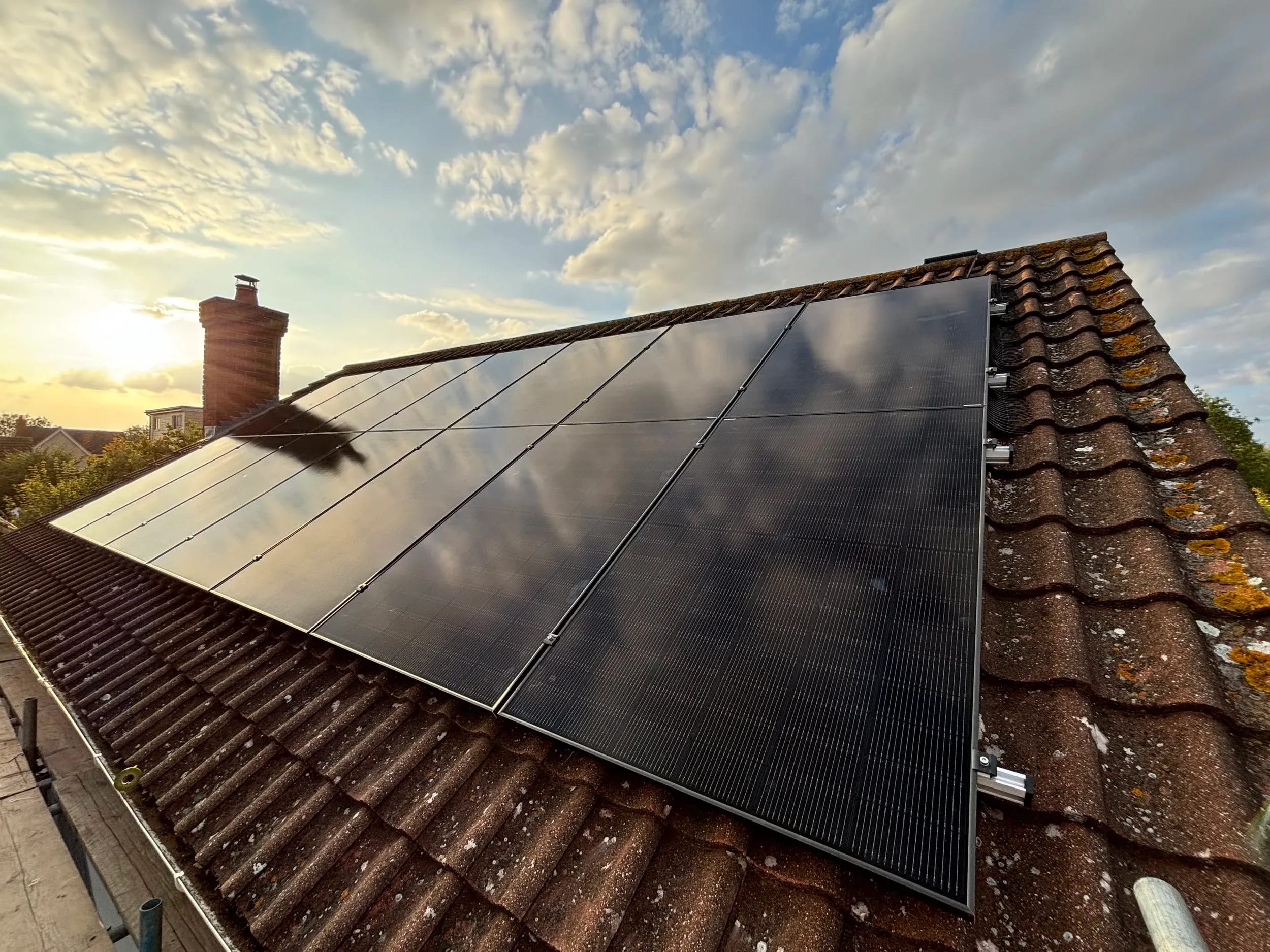
In short
A Warrington roof does most of its work in summer: the three months from May bring in about 37% of its year, midwinter only 6%. So a battery stores your own generation from spring to autumn and works a cheap night tariff in winter. VAT on a battery fitted by one firm is 0% to the end of March 2027, and we tell the split between two networks about it. The figures, with their sources.
The roof studio
Turn the house, fill the roof.
A Cheshire semi on a turntable. Drag it round, then tell it about your roof and your house — the panels, the battery, the current running through it and the numbers all move together.
01Your roof
02Your house
Estimated generation
3,870
kWh a year
Estimated saving
£834
a year, saved and earned
Estimated payback
10.1
years
System size
4.40 kWp
Panels
10
Your use covered
58%
Of what the roof generates
Worked out for a typical Cheshire roof at the pitch and aspect you picked, on a unit rate of 28p and an export rate of 6.5p — rates this tool assumes, dated September 2026, rather than any tariff you have been offered. Nothing here is a quotation: your roof, your shading and how much electricity you use while the sun is up are what the survey settles.
Take the figures with you.
Copy what the studio worked out for your roof, or send it straight to us with a survey request. None of it is a quote: the survey replaces every figure above with your own.
Every assumption behind the numbers
- Unit rate
- 28p for every unit (kWh) you’d otherwise buy from the grid.
- Export rate
- 6.5p for every unit the house and battery can’t use and send back to the grid.
- Your yearly use
- Worked out from your monthly bill at the 28p unit rate, after a standing charge of about 36p a day — and never less than 1,100 kWh a year.
- What a panel makes
- Each panel is 440 W (0.44 kWp). A kWp makes 880 kWh a year facing south, 760 facing east–west and 620 facing north-ish. For this part of Cheshire the EU’s PVGIS model gives 951 for a south roof at a typical pitch — the studio stays below it.
- Pitch
- Shallow (28°) makes 95% of a typical 38° roof; steep (48°) makes 97%.
- Shading
- A bit of shade costs 10%; heavy shade costs 24%.
- How many panels
- Two rows, growing with your bill from three columns to eight — six panels up to sixteen.
- How much you use yourself
- The share of what the roof makes that the house uses: 30% if you’re usually out, 46% in and out, 62% usually home. A battery adds 24 points and a car charger 6, up to 86% — and never more than 62% of your whole year’s use.
- Saving
- The units you use yourself at 28p, plus the units you export at 6.5p.
- Payback
- The yearly saving set against what a system like the one you’ve built typically costs to install: a base figure, an amount for each panel, and more again for a battery or a charger. The answer is held between 4 and 25 years. The studio never shows that cost, because only a survey can price your roof — so treat the years as a rough guide, not a figure to hold us to.
Monthly and yearly sunshine for this area: PVGIS 5.2, EU Joint Research Centre. The unit rate, the export rate and the standing charge are the studio’s own assumptions, set in September 2026 — not a tariff we have quoted you. Your own rates are on your bill, and a survey works from those.
Census 2021, around the centre
Warrington’s homes, and who a battery suits.
Warrington’s central 12 Census neighbourhoods, counted inside Warrington, held 49,103 households in 2021.
- 59% own their home28% outright and 30% with a mortgage; 20% rent privately and 21% from a council or housing association. A battery is a fixed part of the house, so it is the owner’s decision.
- 83% live in a house15% detached, 37% semi-detached and 31% terraced. A garage, a utility room or a sheltered outside wall is where a battery usually goes, and most houses have one of the three.
- 34% have two or more carsA battery and a car charger share the same surplus, so a two-car house is often a house where the battery and the charger are designed together.
Source: ONS Census 2021 (TS044, TS045, TS054) via Nomis, summed over the 2021 middle-layer neighbourhoods whose postcodes sit inside Warrington’s built-up area and Warrington.
PVGIS, for this town
What there is to store in Warrington.
Monthly output of 1 kWp facing due south at a 38° pitch, at Warrington’s own coordinates, averaged over PVGIS-SARAH2 years.
- 31Jan
- 51Feb
- 84Mar
- 109Apr
- 120May
- 114Jun
- 113Jul
- 102Aug
- 87Sep
- 59Oct
- 40Nov
- 29Dec
- The summer surplus is the battery’s jobMay to July make about 37% of a Warrington roof’s year, most of it in the middle of the day when the house is often empty. That is the electricity a battery moves into the evening.
- Winter is a different jobDecember and January together make about 6% of the year here. In those months a battery earns its keep on a time-of-use tariff rather than on the roof’s output.
Modelled with the JRC’s PVGIS tool, version 5.2. A shaded roof, or one facing east or west, makes less; the roof studio above runs the same model for your own roof and bill. Why a battery’s winter job is the tariff: what a roof makes from November to February.
The wires
Connecting a battery to the grid in Warrington.
Warrington is split between two networks. Most of the town, including the centre, is on SP Energy Networks’ SP Manweb; Birchwood is served by SP Electricity North West. The distributor ID at the start of the MPAN on your electricity bill settles it for one house: 13 is SP Manweb, 16 is SP Electricity North West. Either way, a single generator under 16A per phase (3.68kW) is a G98 notification and anything larger a G99 application.
spenergynetworks.opendatasoft.com · electricitynorthwest.opendatasoft.com
A battery is notified the same way as panels, and we send it for you. How G98 and G99 work.
The batteries we fit
Battery systems for homes in Warrington.
Which one suits depends on the space, the house’s usage and whether there are panels already.
- Tesla Powerwall installer in CheshireHome battery with the solar inverter built in
- Fox ESS installer in CheshireHybrid inverters and stacked EP batteries
- EcoFlow installer in CheshirePowerOcean: hybrid inverter over stacked packs
- Hypervolt installer in CheshireA charger that can follow the sun
- Adding a battery to existing solarWhen the panels are already on the roof
With the right battery and a gateway, a power cut stops being your problem; it is a separate decision with its own cost. The three side by side: Tesla Powerwall 3, Fox ESS and EcoFlow PowerOcean, explained.
Straight answers
When we’d tell you not to, in Warrington.
A survey that ends in “not this house” is a good survey. These are the usual reasons.
- Nowhere sensible to put itA battery needs a wall or floor that can take its weight, ventilation and access for servicing; a Tesla Powerwall 3 alone is published at 130 kg. If the only space is a cupboard under the stairs, we would rather say no.
- A small roof and nobody home on a flat tariffIf the panels are small, the house is empty all day and the tariff never changes price, there is little to move and little to arbitrage. In Warrington the two darkest months bring only about 6% of the year’s output, so winter value comes from a time-of-use tariff.
- A rented homeAbout 41% of households around Warrington’s centre rented in 2021. The landlord has to agree to it, and the savings land with whoever pays the bills.
- A supply that cannot take itExporting batteries are notified like panels: most single-phase systems go through G98, and a bigger one needs a G99 application, which we tell you about before you commit.
How it runs
A battery installation in Warrington, step by step.
- CallWhat is already on the roof, what you pay and when you use it. A photo of the inverter label saves a visit.
- SurveyWhere the battery can go, the cable route, the consumer unit and whether backup is wanted.
- InstallUsually a day: mount, wire, commission, and the inverter set to the tariff you are on.
- PaperworkThe split between two networks is notified under G98 or G99 and the app is set up with you before we leave.
Costs and help
What it costs, and what helps, in Warrington.
- 0% VAT until 31 March 2027Residential solar panels, batteries and diverters fitted by an installer who both supplies and installs them are zero-rated for VAT from 1 May 2023 until 31 March 2027, when the rate reverts to 5%. HMRC VAT Notice 708/6 (energy-saving materials).
- The council’s Warm Homes grantWarrington is covered by the Warm Homes: Local Grant (Cheshire and Warrington), which can pay for solar PV in homes rated D to G that pass an income or benefits test, until 31 March 2028. Who qualifies: solar panel grants in Cheshire.
- Paid for what you exportUnder the Smart Export Guarantee your supplier pays for what the battery and panels send back to the grid. Rates and the rules: the Smart Export Guarantee explained.
From the Google profile
Homeowners on their batteries.
11 of our 39 Google reviews mention a battery. Here are 6, word for word; none is located to a town, so none is claimed for Warrington.
Where we work
Battery storage across Warrington: the postcodes.
Warrington’s centre takes in the WA1, WA2, WA4 and WA5 postcode districts, across the Bewsey and Whitecross, Orford, Fairfield and Howley, Latchford West, Latchford East and Stockton Heath wards. Wherever the house is, the battery goes where it can be ventilated and reached, usually a garage or an outside wall, and the survey decides which.
Warrington · questions
Batteries in Warrington: what people ask.
If yours isn’t here, give us a ring and ask, or see every question.
In Warrington, December and January make only about 6% of a south-facing roof’s year, so in midwinter the panels will rarely fill a battery. A battery still earns its place on a time-of-use tariff, charging when grid electricity is cheapest and running the house through the expensive hours, while May to July, about 37% of the year, is when it stores the most of your own generation.
Yes. A battery that can export is a generator in the network’s eyes, so it is notified to the operator the same way as panels: a G98 notification for a small single-phase unit, and a G99 application for anything bigger. In Warrington that goes to the split between two networks (check the MPAN distributor ID on your bill).
Yes. Adding a battery to an existing system is one of the four things we do, and whether it sits beside the current inverter or replaces it depends on what is already on your wall. We fit Tesla Powerwall, Fox ESS and EcoFlow, and look at the existing installation before recommending one.
It can, if the system is designed for backup: a Tesla Powerwall 3 goes in with a Backup Gateway 2 that switches the house over when the grid drops. Backup needs its own wiring, so say if you want it before the survey.
Over a year, PVGIS estimates 938 kWh per kWp for a south-facing roof at Warrington’s coordinates, peaking in May at 120 kWh. Most of that arrives around midday, so the size of battery that makes sense depends on how much of it the house uses as it is made.
Not until 31 March 2027 for most homes: a battery supplied and fitted by one firm is zero-rated, with or without panels, and the rate goes to 5% after that.
15 miles in a straight line from Ellesmere Port. The nearest towns we also cover, Widnes, Runcorn, St Helens, have battery pages of their own.
Data last reviewed: October 2026.
From the blog
Worth reading before a battery survey in Warrington.
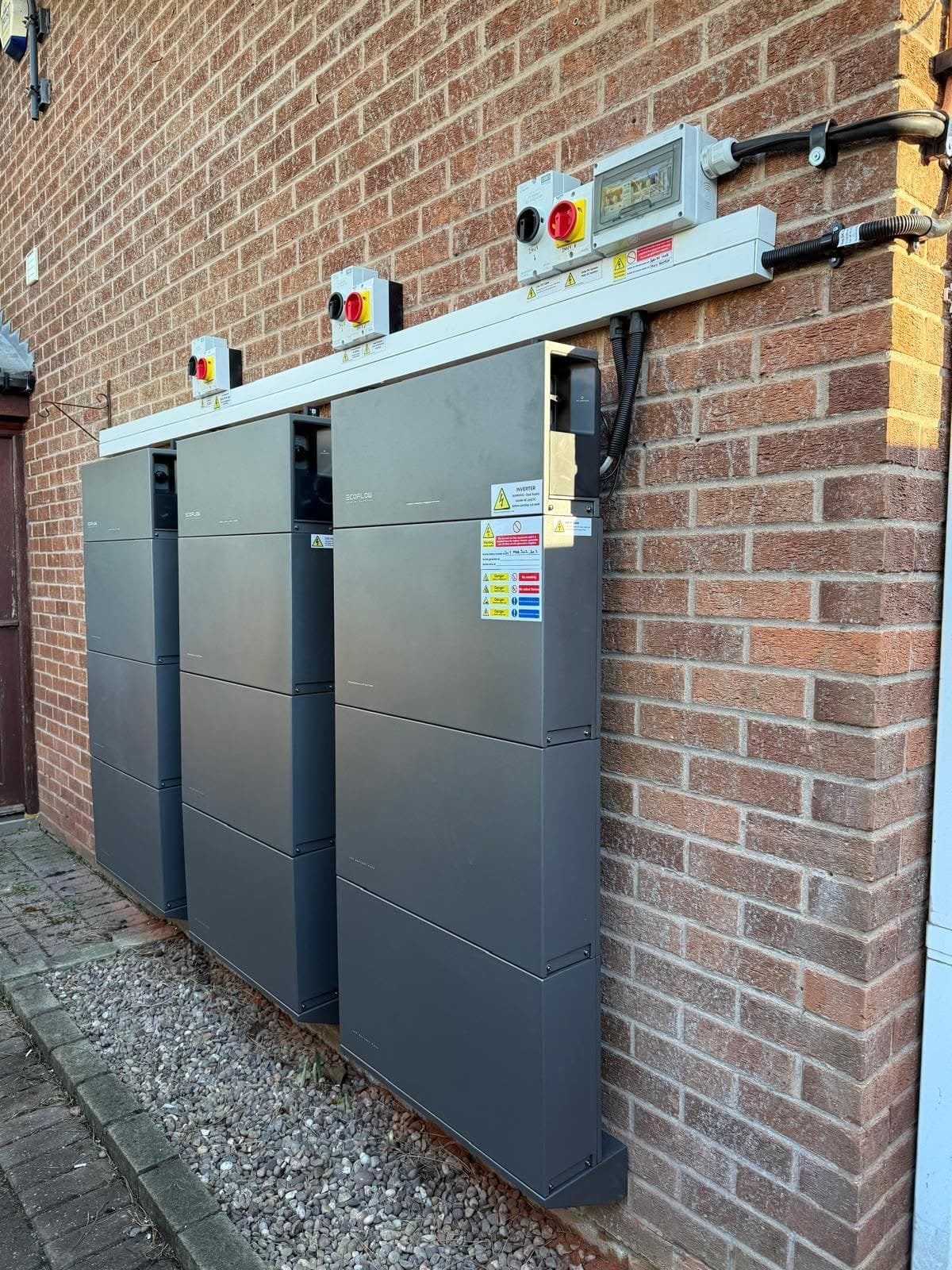
EcoFlow PowerOcean explained: packs, usable capacity and where it can go
EcoFlow PowerOcean from the installer's side: 5 kWh LFP packs, usable capacity, limits per inverter, backup output, cycle life, protection and mounting.
19 October 2026
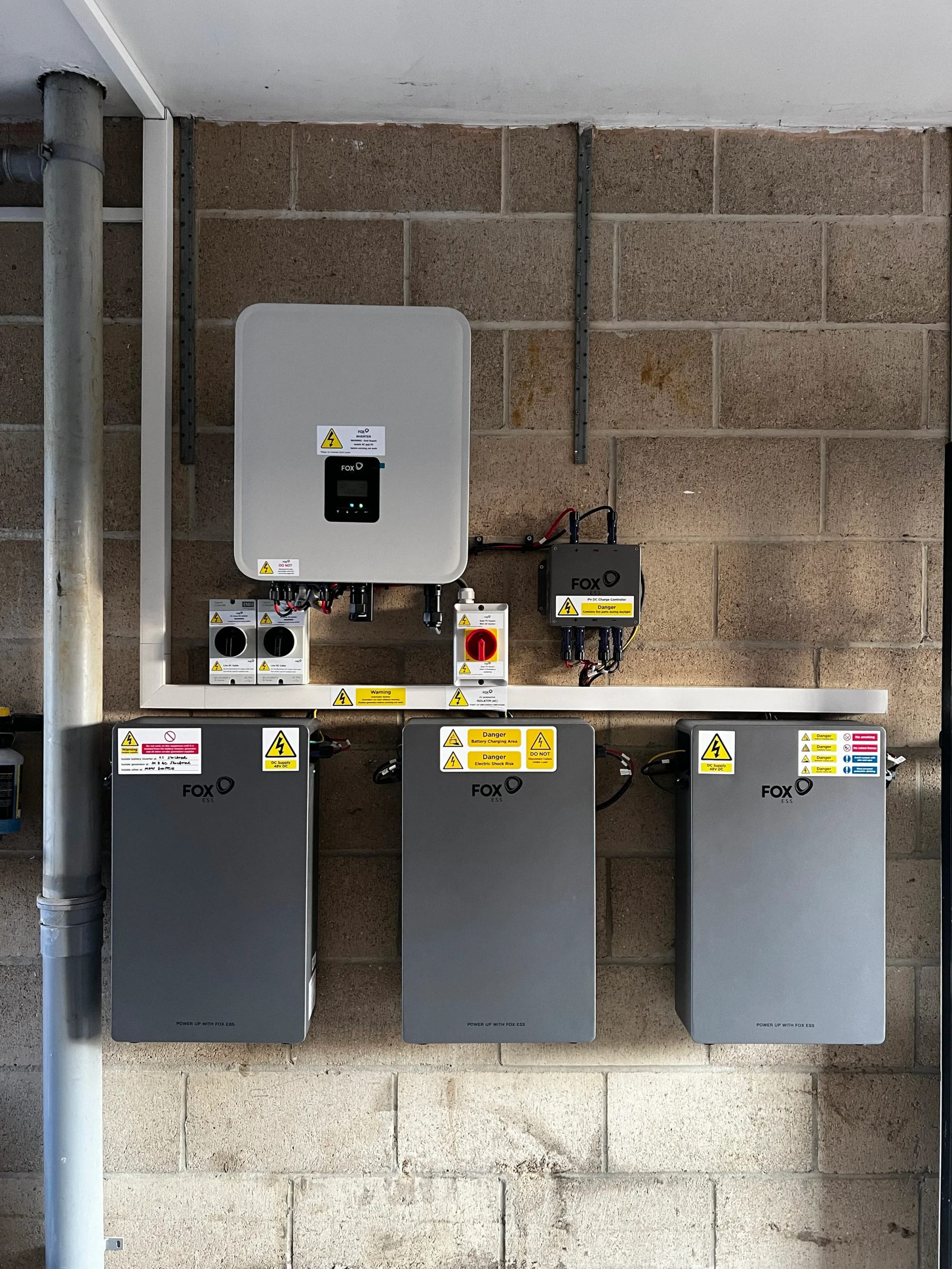
Fox ESS batteries explained: EP batteries, K-series inverters and FoxCloud
A Fox ESS battery from the installer's side: EP capacities, the K-series hybrid inverter, new or retrofit, FoxCloud 2.0 work modes, protection, the cold.
19 October 2026
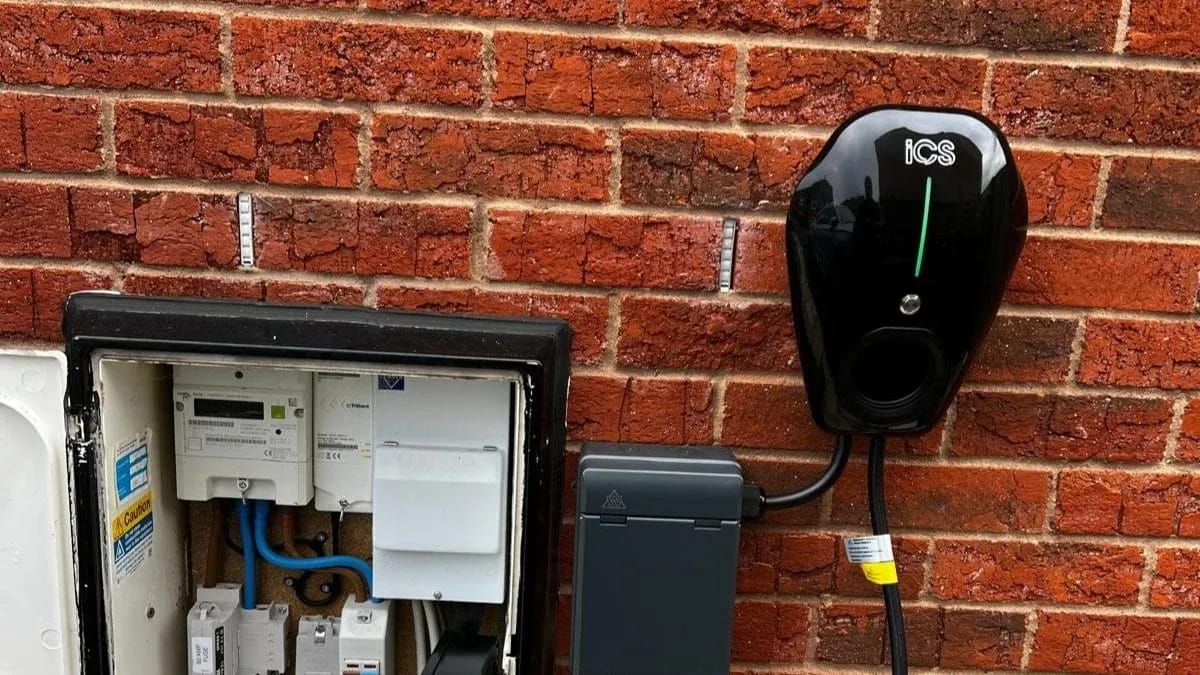
Intelligent Octopus Go: what it needs from your home charger
How Octopus Intelligent Go works with a home EV charger: the six-hour window, which chargers and cars it needs, and how it sits with solar and a battery.
19 October 2026
Around here
Battery storage near Warrington.
Nearest towns we cover
- Battery storage in WidnesHalton
- Battery storage in RuncornHalton
- Battery storage in St HelensSt Helens
What we fit in Warrington
Also for Warrington
- Solar panels in WarringtonWhat a roof here makes, and the planning rules
- EV charger installation in WarringtonA smart charger, the planning rules and the network
- CheshireEvery town in the region, with its network and councils
- Home battery storage installationHow the survey and the design run
- Solar and planning in WarringtonThe council’s conservation areas and rules
Start here
Get a Warrington quote.
Tell us the postcode and roughly what you use. We’ll tell you honestly whether the roof is worth doing — and if it isn’t, that’s a perfectly good answer too.
- Takes about a minute
- You get a person, not a brochure
- No obligation, and no visit until you ask for one