

Merseyside and the Wirral
Solar panels in St Helens.
Solar panels in St Helens start with the roof: St Helens is 14 miles from our Ellesmere Port base, in St Helens’s planning area, and by the PVGIS model a south-facing roof here makes about 939 kWh a year for every kWp of panels, about 1% less than the same roof at our Ellesmere Port base.
In short
PVGIS puts a south-facing St Helens roof at 939 kWh for each kWp in an average year. Of the homes near the centre, 90% are houses with their own roof and 10% are flats (2021 Census). Solar on a house here is usually permitted development, VAT on panels from one firm is 0% to the end of March 2027, and we notify the SP Manweb network. The figures, with their sources.
The roof studio
Turn the house, fill the roof.
A Cheshire semi on a turntable. Drag it round, then tell it about your roof and your house — the panels, the battery, the current running through it and the numbers all move together.
01Your roof
02Your house
Estimated generation
3,870
kWh a year
Estimated saving
£834
a year, saved and earned
Estimated payback
10.1
years
System size
4.40 kWp
Panels
10
Your use covered
58%
Of what the roof generates
Worked out for a typical Cheshire roof at the pitch and aspect you picked, on a unit rate of 28p and an export rate of 6.5p — rates this tool assumes, dated September 2026, rather than any tariff you have been offered. Nothing here is a quotation: your roof, your shading and how much electricity you use while the sun is up are what the survey settles.
Take the figures with you.
Copy what the studio worked out for your roof, or send it straight to us with a survey request. None of it is a quote: the survey replaces every figure above with your own.
Every assumption behind the numbers
- Unit rate
- 28p for every unit (kWh) you’d otherwise buy from the grid.
- Export rate
- 6.5p for every unit the house and battery can’t use and send back to the grid.
- Your yearly use
- Worked out from your monthly bill at the 28p unit rate, after a standing charge of about 36p a day — and never less than 1,100 kWh a year.
- What a panel makes
- Each panel is 440 W (0.44 kWp). A kWp makes 880 kWh a year facing south, 760 facing east–west and 620 facing north-ish. For this part of Cheshire the EU’s PVGIS model gives 951 for a south roof at a typical pitch — the studio stays below it.
- Pitch
- Shallow (28°) makes 95% of a typical 38° roof; steep (48°) makes 97%.
- Shading
- A bit of shade costs 10%; heavy shade costs 24%.
- How many panels
- Two rows, growing with your bill from three columns to eight — six panels up to sixteen.
- How much you use yourself
- The share of what the roof makes that the house uses: 30% if you’re usually out, 46% in and out, 62% usually home. A battery adds 24 points and a car charger 6, up to 86% — and never more than 62% of your whole year’s use.
- Saving
- The units you use yourself at 28p, plus the units you export at 6.5p.
- Payback
- The yearly saving set against what a system like the one you’ve built typically costs to install: a base figure, an amount for each panel, and more again for a battery or a charger. The answer is held between 4 and 25 years. The studio never shows that cost, because only a survey can price your roof — so treat the years as a rough guide, not a figure to hold us to.
Monthly and yearly sunshine for this area: PVGIS 5.2, EU Joint Research Centre. The unit rate, the export rate and the standing charge are the studio’s own assumptions, set in September 2026 — not a tariff we have quoted you. Your own rates are on your bill, and a survey works from those.
Census 2021, around the centre
St Helens’s homes and their roofs.
St Helens’s central 10 Census neighbourhoods, counted inside St Helens, held 38,061 households in 2021.
- 90% live in a house with a roof of its own10% detached, 46% semi-detached and 34% terraced. A semi or a terrace usually has one main roof slope facing the street and one facing the garden, so the direction of the house decides which side the panels go.
- 10% live in a flatA block’s roof is shared and belongs to the freeholder, so panels on a flat start with their permission, not ours.
- 60% own their home33% outright and 27% with a mortgage. Panels stay with the house, so they suit someone planning to stay, or a buyer who values a lower bill.
Source: ONS Census 2021 (TS044, TS045, TS054) via Nomis, summed over the 2021 middle-layer neighbourhoods whose postcodes sit inside St Helens’s built-up area and St Helens.
PVGIS, for this town
What a roof in St Helens makes.
Monthly output of 1 kWp facing due south at a 38° pitch, at St Helens’s own coordinates, averaged over PVGIS-SARAH2 years.
- 31Jan
- 51Feb
- 84Mar
- 109Apr
- 121May
- 114Jun
- 114Jul
- 103Aug
- 86Sep
- 58Oct
- 40Nov
- 29Dec
- 939 kWh per kWp in a typical yearThat puts St Helens 1% below the figure for our base. As an illustration, a 4 kWp south-facing array in St Helens would make roughly 3,760 kWh a year.
- May is the strongest monthAbout 121 kWh per kWp, against 29 in December. May to July make about 37% of the year between them.
Modelled with the JRC’s PVGIS tool, version 5.2. A shaded roof, or one facing east or west, makes less; the roof studio above runs the same model for your own roof and bill. Month by month, the dark half of the year: whether solar panels work in winter.
The wires
Connecting panels to the grid in St Helens.
St Helens is on SP Energy Networks’ SP Manweb network, the licence area SPEN describes as covering “North Wales, Merseyside, Cheshire and North Shropshire”. A single generator under 16A per phase (3.68kW) is notified under G98 “before or at the time of commissioning”, and the commissioning confirmation is due “within 30 days of commissioning”; anything larger goes through a G99 application.
spenergynetworks.opendatasoft.com · spenergynetworks.co.uk
We send the notification for you. How G98 and G99 work.
Planning
Planning rules in St Helens for rooftop solar.
In England, rooftop solar on a house is normally permitted development under Part 14, Class A of the GPDO 2015, as amended on 27 August 2026: no more than 0.2 metres out from a pitched roof, nothing above its highest part, and no more than 0.6 metres above a flat roof. A listed house has no such rights, and in a conservation area panels may not go on a wall, balcony or roof enclosure fronting a highway.
legislation.gov.ukSt Helens has eight conservation areas. St Helens Borough Council’s page does not place a conservation area in St Helens by name, so check the council’s map for your address. The council publishes an appraisal for each area and copies of its Article 4 Directions. Extra controls are in place to manage or resist alterations that affect public views of the area, including the installation of UPVC windows and doors; Article 4 Directions cover High Street (Newton-le-Willows), Rainford, Rainhill and Vulcan Village.
sthelens.gov.uk
More on solar panels and planning in St Helens, our UK guide to whether solar panels need planning permission, and how panels go on a flat roof.
What goes with the panels
Batteries and chargers for St Helens roofs.
Which one suits depends on the space, the house’s usage and whether there are panels already.
- Tesla Powerwall installer in Merseyside & WirralHome battery with the solar inverter built in
- Fox ESS installer in Merseyside & WirralHybrid inverters and stacked EP batteries
- EcoFlow installer in Merseyside & WirralPowerOcean: hybrid inverter over stacked packs
- Hypervolt installer in Merseyside & WirralA charger that runs on the panels’ surplus
A battery stores the surplus the panels make at midday; a solar-aware charger puts it into the car. Both are on our home battery storage installation and EV charger installation pages.
Straight answers
When we’d tell you not to, in St Helens.
A survey that ends in “not this house” is a good survey. These are the usual reasons.
- A roof that faces north, or sits in heavy shadeThe PVGIS figure on this page is for a south-facing roof. A north-facing slope or a roof under tall trees or a neighbour’s gable can make so much less that the numbers stop working, and we would say so at the survey rather than fit it anyway.
- A flat, rather than a houseAbout 10% of households around St Helens’s centre lived in a flat in 2021. The roof of a block is the freeholder’s, which means their consent and usually a lease variation come first; it can be done, but it is not a quick job.
- A listed house, or a conservation-area frontageA listed house needs consent before anything goes on the roof, and in a conservation area the street-facing side has limits. St Helens’s map is the place to check an address.
- A roof that needs replacing soonPanels last decades. If the roof covering is near the end of its life, re-roofing first and fitting the panels once is cheaper than lifting and refitting them later.
How it runs
A solar installation in St Helens, step by step.
- CallYour bill, the roof and where the meter is. Photographs help, and most of it is settled in ten minutes.
- SurveyWe look at the roof, the loft and the consumer unit in St Helens, measure the shading and design around how you use electricity.
- InstallScaffold, mount, panels, inverter, isolators, test. Most houses take one or two days on the roof.
- PaperworkThe SP Manweb network is notified, the MCS certificate is issued and the app is set up with you.
Costs and help
What it costs, and what helps, in St Helens.
- What homes paid last yearThe government’s own 2025/26 figures for the North West, per kW and by system size, are on our solar panel cost page. Your price comes from the survey.
- 0% VAT until 31 March 2027Residential solar panels, batteries and diverters fitted by an installer who both supplies and installs them are zero-rated for VAT from 1 May 2023 until 31 March 2027, when the rate reverts to 5%. HMRC VAT Notice 708/6 (energy-saving materials).
- Paid for what you exportUnder the Smart Export Guarantee your supplier pays for what the panels send back to the grid. Rates and the rules: the Smart Export Guarantee explained.
From the Google profile
Homeowners on their solar.
18 of our 39 Google reviews mention solar. Here are 6, word for word; none is located to a town, so none is claimed for St Helens.
Where we work
Solar panels across St Helens.
Around the centre of St Helens, the postcodes inside St Helens fall in the St Helens Town Centre, Moss Bank, Windle, Peasley Cross & Fingerpost, Parr, West Park, Thatto Heath, Eccleston and Rainford wards, in the WA10, WA11 and WA9 postcode districts. A survey anywhere in them starts the same way: the roof, the meter cabinet and the electricity bill.
St Helens · questions
Solar panels in St Helens: what people ask.
If yours isn’t here, give us a ring and ask, or see every question.
Over a year, PVGIS estimates 939 kWh per kWp for a south-facing, 38° roof at St Helens’s coordinates, ranging from 29 kWh in December up to 121 kWh in May. A roof facing east or west, or one with shade, makes less, which is why the survey looks at your roof rather than the town average.
Usually not. In England panels on a house are normally permitted development within set limits, but a listed house needs consent first, and conservation areas add limits on the street-facing side of a house. St Helens Borough Council is the planning authority for St Helens, and its map shows whether an address is affected.
The SP Manweb network. Every system is notified to that operator, and we send the paperwork for you.
In the 2021 Census, St Helens’s central neighbourhoods had 10% of households in detached houses, 46% in semis and 34% in terraces: 90% with a roof of their own. Whether one particular roof works comes down to its direction, its shading and its condition, which is what the survey checks.
There is no general grant for solar panels in St Helens. What applies to every home is 0% VAT on panels supplied and fitted by one firm until 31 March 2027, and export payments under the Smart Export Guarantee.
St Helens Borough Council. Its own conservation-area page, linked in the planning section above, is the place to check a particular address before the survey; if the house is listed or the roof is flat, mention it when you get in touch.
As the crow flies, 14 miles from Ellesmere Port, where we are based. The nearest towns we also cover are Widnes, Warrington, Runcorn, each with its own page.
Data last reviewed: October 2026.
From the blog
Worth reading before a solar survey in St Helens.
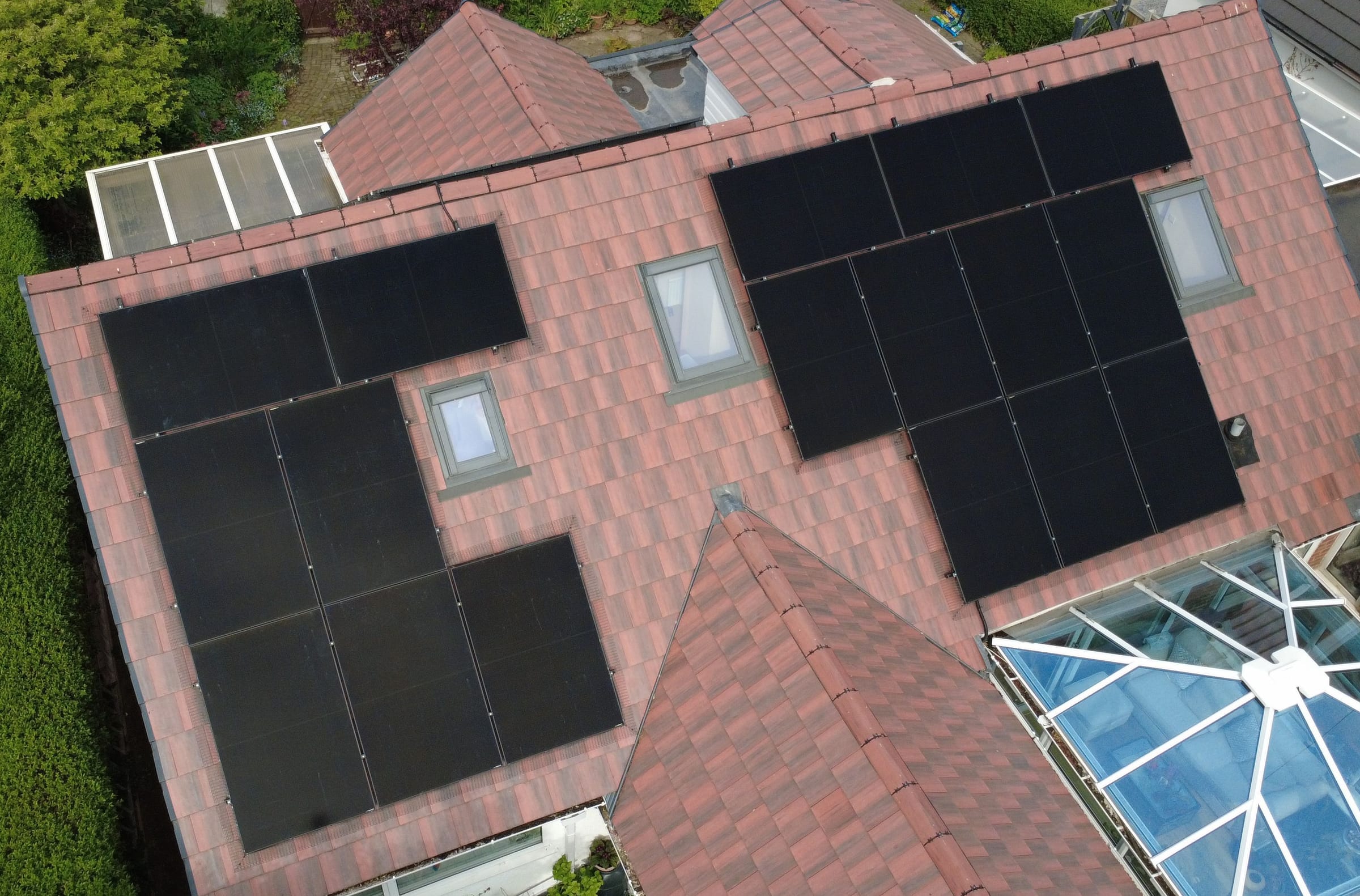
Do solar panels need planning permission?
When solar panels on a house are permitted development in England and Wales, the limits that apply since August 2026, and when you need the council first.
15 October 2026
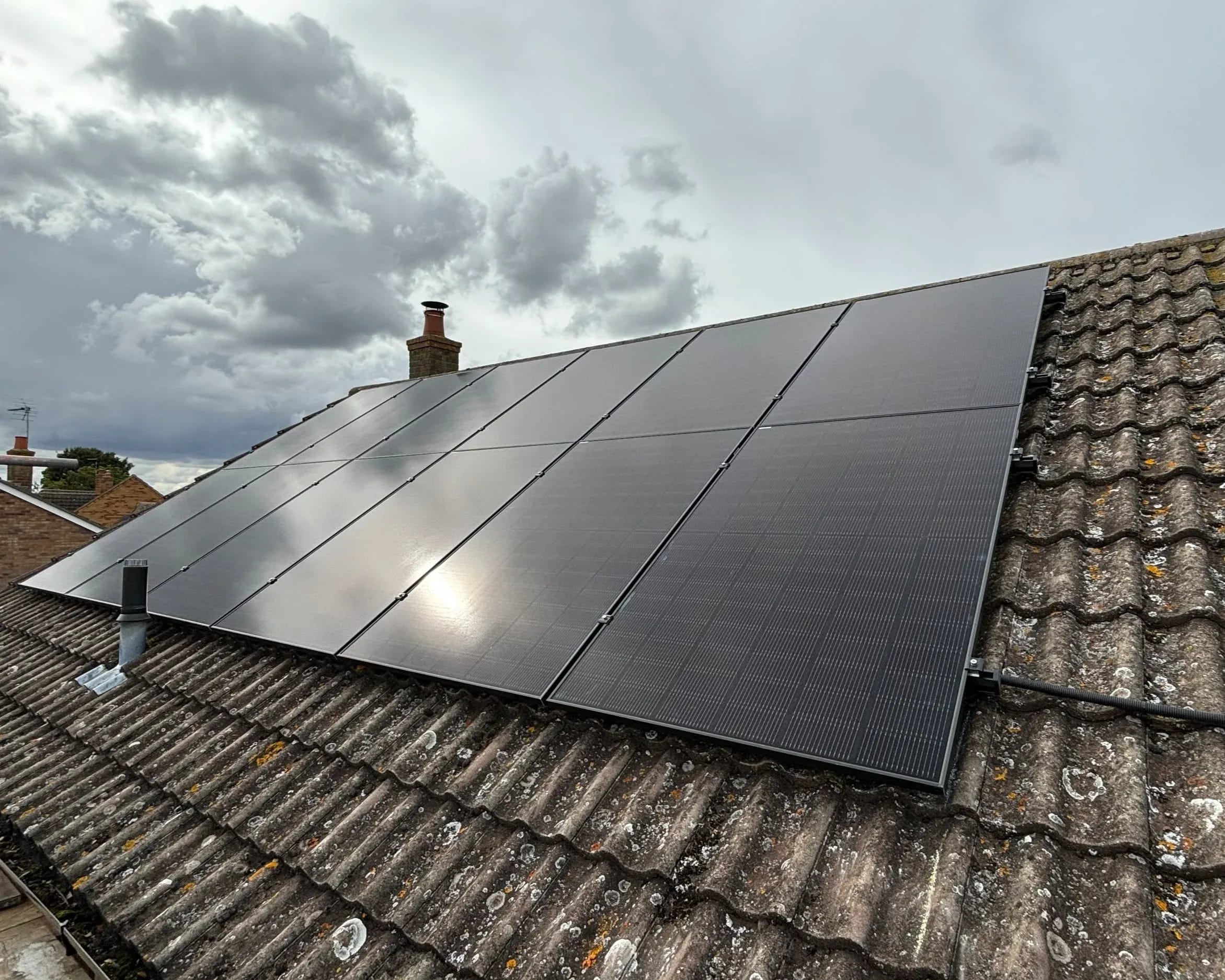
Do solar panels work in winter?
Yes, but far less: what a south-facing roof in Cheshire makes month by month, why winter is a small slice of the year, and what a battery does in December.
15 October 2026
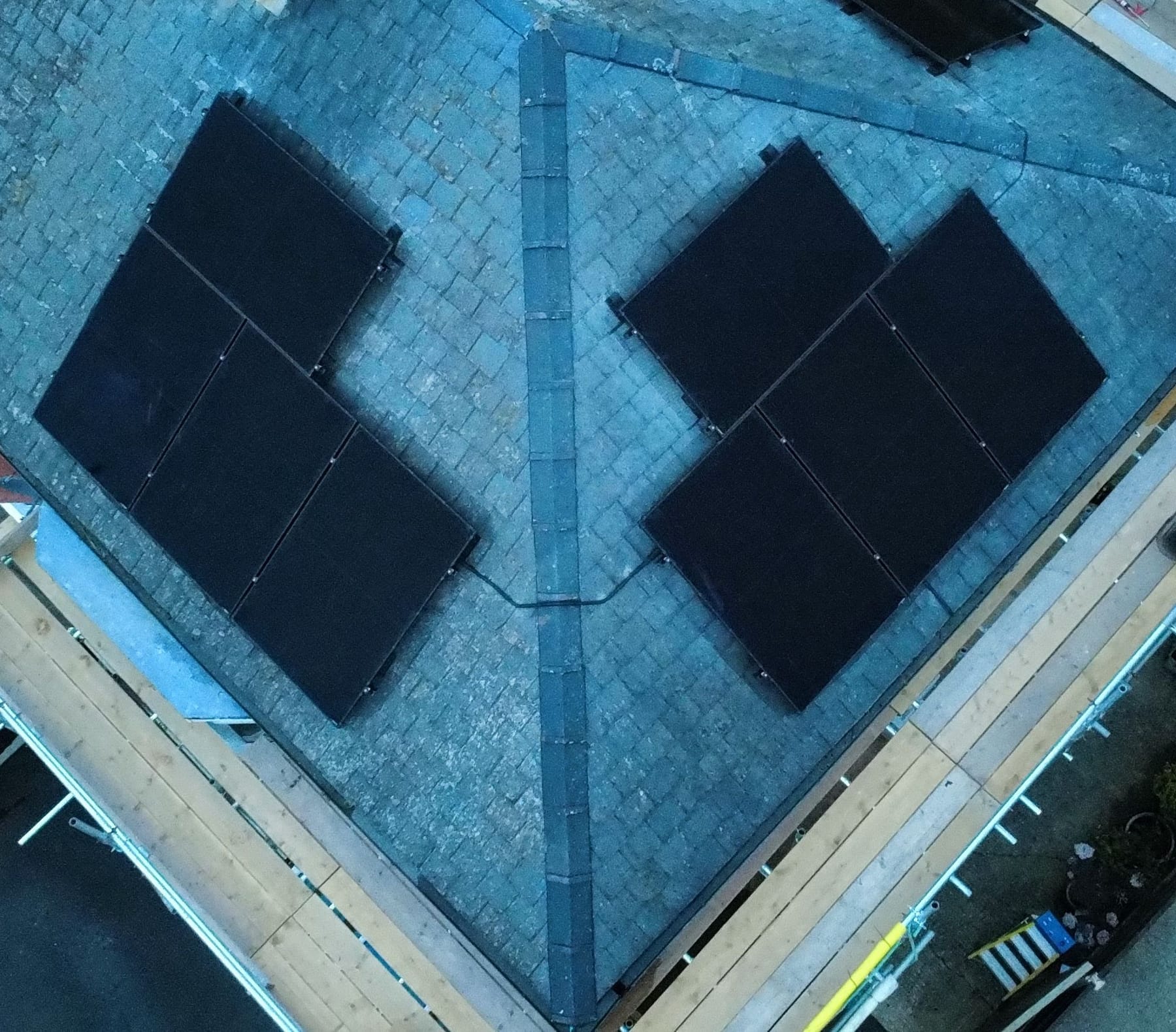
Solar panels on a flat roof: how they're fitted and what's allowed
How solar panels are fixed to a flat roof, why ballast needs a wind calculation and an engineer, the roof warranty, and the planning limits that apply.
15 October 2026
Around here
Solar panels near St Helens.
Nearest towns we cover
What we fit in St Helens
Also for St Helens
- Battery storage in St HelensKeep the midday surplus for the evening
- EV charger installation in St HelensA smart charger, the planning rules and the network
- Merseyside and the WirralEvery town in the region, with its network and councils
- Solar PV installationHow the survey and the design run
- Solar and planning in St HelensThe council’s conservation areas and rules
Start here
Get a St Helens quote.
Tell us the postcode and roughly what you use. We’ll tell you honestly whether the roof is worth doing — and if it isn’t, that’s a perfectly good answer too.
- Takes about a minute
- You get a person, not a brochure
- No obligation, and no visit until you ask for one