
Do solar panels need planning permission?
When solar panels on a house are permitted development in England and Wales, the limits that apply since August 2026, and when you need the council first.
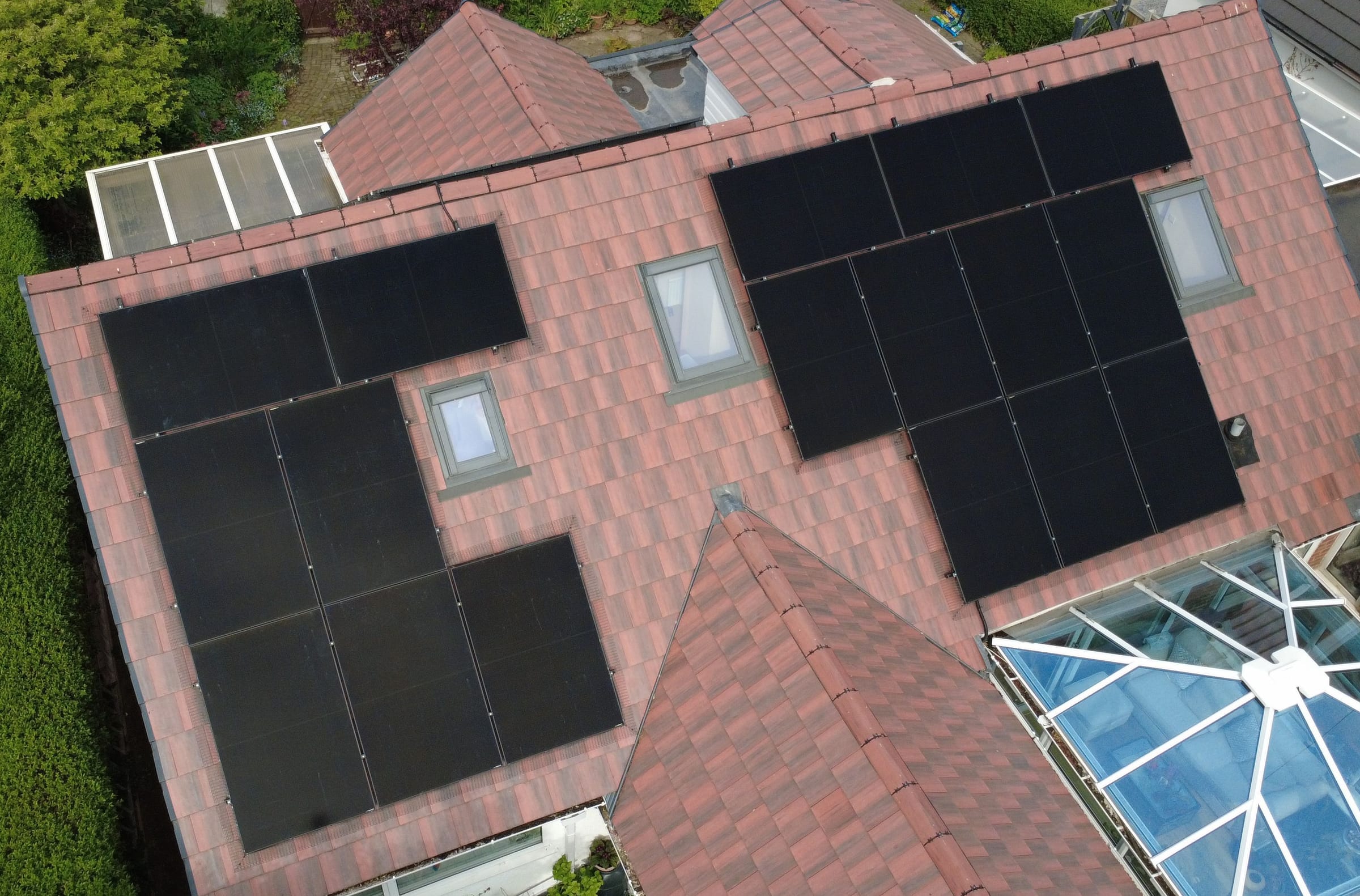
For most houses in England, no. Solar panels on a house are normally permitted development, which means the law grants the permission already and you don’t apply to the council, as long as the installation stays inside a set of limits. Those limits changed on 27 August 2026, and they’re different again in Wales. Here’s what they are, when they stop applying, and what to check before anything goes on the roof.
Where the rule comes from
In England it’s Class A of Part 14 in Schedule 2 of the General Permitted Development Order 2015, usually shortened to the GPDO. Class A covers solar PV and solar thermal equipment on a house or a block of flats. A statutory instrument, SI 2026/896, amended it from 27 August 2026: it set separate limits for walls, balconies and roof enclosures on a house, and added rules for plug-in solar.
The limits on a house in England
On a house, or a building within its curtilage, panels stay permitted development only if:
- On a pitched roof, they stand no more than 0.2 metres out from the roof slope, and the highest part of the array is no higher than the highest part of the roof. Chimneys don’t count.
- On a flat roof, the highest part of the array is no more than 0.6 metres above the highest part of the roof, again leaving chimneys out.
- On a wall, they stand out no more than 0.2 metres where the wall abuts a highway, and no more than 0.4 metres anywhere else.
- On a balcony or roof enclosure, the same pair of limits applies: 0.2 metres where the enclosure abuts a highway, 0.4 metres otherwise.
Two conditions come with every installation. The panels must be sited, so far as practicable, to minimise their effect on the outside appearance of the building and on the amenity of the area. And they must be removed as soon as reasonably practicable once they are no longer needed.
When solar panels do need planning permission
Permitted development doesn’t cover every house. In England the Class A rights don’t apply, and you need consent, if:
- The house is a listed building. The rights are switched off entirely, so listed building consent comes first.
- The site is a scheduled monument.
- The house is in a conservation area or a World Heritage Site and the panels would go on a wall, balcony or roof enclosure that fronts a highway. A roof slope is not on that list, so panels on the roof of a house in a conservation area can still be permitted development.
- The array goes on a flat roof on “article 2(3) land”, the protected land the order defines, which includes conservation areas. Before work starts, you apply to the council for a determination of whether it needs to approve how the panels will look. That is a prior approval, not a full planning application.
Plug-in solar, the small kits that plug into a socket, has a rule of its own: no part of it may go on a wooden wall, balcony or enclosure, or on any part of the outside of a house that is clad in timber.
Blocks of flats sit under a separate list, with similar height limits and their own exclusions, so check that list rather than the house limits if you own a flat.
Wales is not the same
Planning is devolved, so England’s August 2026 amendment stops at the border. On a Welsh house, the Welsh Government’s guidance is that panels on a wall or pitched roof should project no more than 200mm from the surface. A flat-roof array may not sit within 1 metre of the roof’s outside edge, or stand more than 1 metre above the plane of the roof. In a conservation area, panels on a principal or side wall that can be seen from the highway need consent. Cadw’s Cof Cymru record shows whether a Welsh house is listed. For us, that matters at Wrexham and Mold, both on our Cheshire and North Wales page.
What that means round here
Conservation areas are common across our patch, and each council publishes its own map. Cheshire West and Chester lists 96 conservation areas and Cheshire East 76. Wirral has 26, including Port Sunlight and Hamilton Square, and Liverpool 36, covering 9% of the city. Most of those houses can still have panels on the roof under permitted development. It’s walls and enclosures fronting the street, flat roofs and listed buildings that need the council first. Our Merseyside and Wirral page lists the councils on that side of the Mersey and links to each one’s map.
An Article 4 direction can also take permitted development rights away in a particular street or area. Liverpool warns that works there may be subject to one, and Cheshire East points you to its mapping system to check whether a house is covered, so look before the survey.
Planning is one check of several
Being allowed to fit panels isn’t the same as the roof being able to take them. An MCS-certified installation also includes a check that the roof structure can carry the load, and a notification to your network operator, under G98 or G99 depending on the size of the system. Our guide to the G99 application covers that side. If your roof is flat, there’s more in our guide to solar panels on a flat roof.
If your house is listed, in a conservation area, or has a flat roof, tell us on the first call. It changes the design, and sometimes the order things happen in, but rarely whether solar works at all. Our solar PV page sets out how the survey and the design run.