
EcoFlow PowerOcean explained: packs, usable capacity and where it can go.
EcoFlow PowerOcean from the installer's side: 5 kWh LFP packs, usable capacity, limits per inverter, backup output, cycle life, protection and mounting.
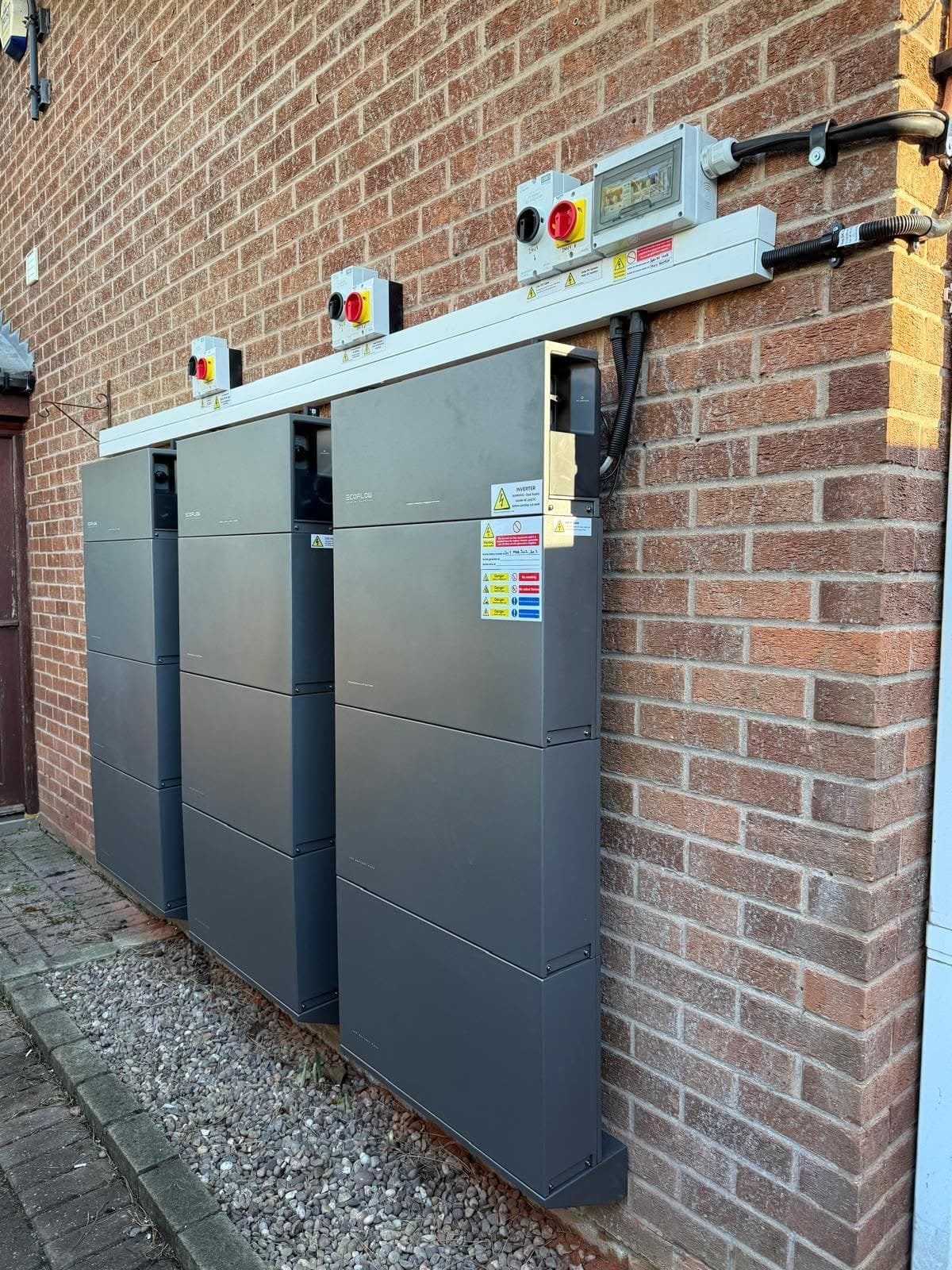
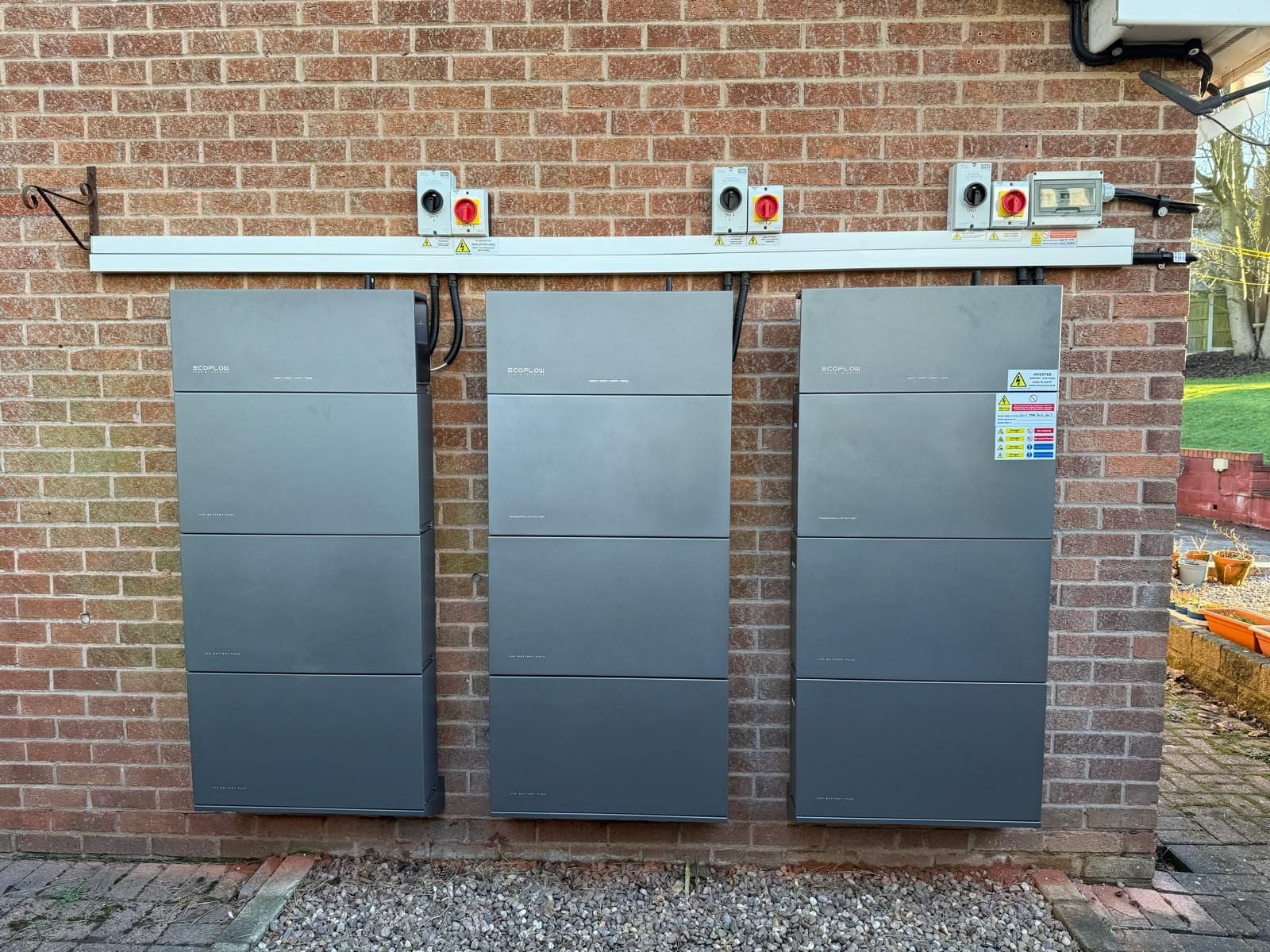
EcoFlow PowerOcean is a home battery system built as a stack: a hybrid inverter on top, with 5 kWh LFP battery packs beneath it, on a floor stand or fixed to a wall. EcoFlow publishes one to four packs per inverter, up to 19.4 kWh usable on the single-phase system, and up to three inverters cascaded to reach 60 kWh. We fit PowerOcean, and this is what the published figures mean for a real house.
How an EcoFlow PowerOcean stack is built
Each stack has two parts. The hybrid inverter sits at the top. It takes the solar panels, runs the batteries and connects to the house. Below it sit the battery packs, which EcoFlow sells as 5 kWh packs, starting from one.
Everything in this post is from EcoFlow’s single-phase PowerOcean page and datasheet. EcoFlow sells a separate three-phase PowerOcean system with its own figures. If your home is on a three-phase supply, the numbers below would change.
Usable capacity, pack by pack
A battery never uses every last kilowatt-hour it holds. EcoFlow publishes a 95 % depth of discharge on the single-phase system, and gives both the nominal and the usable figure for each stack size:
| Packs on one inverter | Nominal capacity | Usable capacity | Battery max output | Battery max input |
|---|---|---|---|---|
| 1 | 5.1 kWh | 4.8 kWh | 3,300 W | 2,500 W |
| 2 | 10.2 kWh | 9.7 kWh | 6,600 W | 5,000 W |
| 3 | 15.3 kWh | 14.5 kWh | 9,900 W | 7,500 W |
| 4 | 20.4 kWh | 19.4 kWh | 13,200 W | 10,000 W |
EcoFlow notes that the depth of discharge can vary at low temperature, so the usable figure is a guide for normal conditions rather than a promise on the coldest night.
The battery output figures are what the packs can deliver, not what reaches your house. That is set by the inverter, which is the next limit.
The limits per inverter
EcoFlow publishes the single-phase hybrid inverter in five ratings: 3,000, 3,680, 4,600, 5,000 and 6,000 W of rated AC output. Whatever the packs below can give, the house sees no more than the inverter’s rating.
One inverter carries up to four packs, 20.4 kWh nominal. Beyond that, EcoFlow cascades up to three hybrid inverters to reach 60 kWh. Each inverter then has its own stack, and its own isolators on the wall, so a bigger system takes more wall than a single stack does.
On the solar side, EcoFlow publishes two maximum power point trackers per inverter and a maximum PV power from 9,000 W to 12,000 W depending on the model. The inverter’s efficiency is published at over 96 %.
Backup output: what it can run in a power cut
EcoFlow publishes up to 6 kW of continuous off-grid power on the single-phase range, with each inverter’s backup output matching its rating, from 3,000 VA to 6,000 VA. EcoFlow’s own list of what it is meant to keep going includes a heat pump, the fridge and the Wi-Fi router.
So if backup matters to you, the inverter rating matters as much as the number of packs. A larger stack keeps essentials running for longer; a larger inverter lets more of them run at once.
Cycle life and chemistry
The packs use lithium iron phosphate (LFP) cells, at a nominal 800 V. EcoFlow publishes a cycle life of 6,000 or more charge cycles. A cycle is one full charge and discharge, so a battery that cycles once a day would take many years to reach that figure.
Protection, temperature and noise
EcoFlow builds PowerOcean for outdoor walls as well as garages:
- Enclosure: IP65, with an active aerosol fire-prevention module integrated into the packs.
- Temperature: −20 °C to 50 °C, with built-in heating pads that keep the packs at operating temperature. EcoFlow notes the inverter derates above 40 °C or below 0 °C.
- Cooling and noise: natural convection, at 35 dB or less, so there is no fan to hear.
- Humidity: 0 to 100 %, condensing.
That combination means an outside wall is a normal place for it, though a wall in full afternoon sun is still a worse choice than a shaded one.
Mounting and weight
EcoFlow publishes floor stand or wall mounting. A single pack is 680 × 183 × 424 mm and 55.5 kg. A one-pack system is 452 mm tall and about 59 kg; a four-pack system rises to 1,641 mm and 225.7 kg. A full stack is a lot of weight, so on a wall the fixings and the wall itself are part of the design, and a floor stand is often the better choice for a big stack.
The app and tariffs
Homeowners use the EcoFlow app and web portal; installers have a separate Pro app and portal. EcoFlow publishes a dynamic tariff dashboard that connects to dynamic pricing platforms such as Octopus Flux or Agile, with 24-hour tariff pricing, so the system can plan around the price of electricity. The inverter supports Wi-Fi, 4G and wired connections, and updates arrive over the air.
The network operator
EcoFlow lists G98, G99 and G100 among the grid standards the inverter meets. Which applies to your house depends on the total rating on your supply, and that includes the inverter rating you choose. Our guide to G98, G99 and your network operator explains the difference, and we handle that paperwork for the systems we fit.
Is PowerOcean a good fit for your house?
We would rather show you the trade-offs than give a verdict. The things we weigh with you:
- Room to grow. Packs are added one at a time, up to four on one inverter, and a second or third inverter takes it further. A household that expects an electric car or a heat pump later has somewhere to go.
- Usable figures, published. EcoFlow gives the usable capacity for each stack size, which makes it easier to match the battery to your evenings.
- The inverter rating. It caps what the house can draw from the stack at once, and what runs in a power cut, so it is chosen as carefully as the number of packs.
- The wall. A tall stack is heavy, and a hot wall is the wrong wall.
- Single or three-phase. EcoFlow sells separate systems, so the supply decides which one we design around.
What we’d do
We start with your evening and overnight use, and whether you want backup, then choose the inverter rating and the number of packs. A household that expects to grow can start with one or two packs and add more, up to four on the same inverter. If you already have panels, our post on adding a battery to the solar you already have covers the choices. We pick a wall or a floor stand that suits the weight, keep the stack out of the hottest sun, and set up the app with you before we leave.
EcoFlow PowerOcean near you
There is more on our EcoFlow page and our home battery storage page. We fit PowerOcean across Cheshire, Merseyside and the Wirral and Greater Manchester.