
EV charger installation cost: what decides it.
What decides the cost of installing an EV charger at home: your supply and main fuse, the cable run, earthing, the cable style and the paperwork.
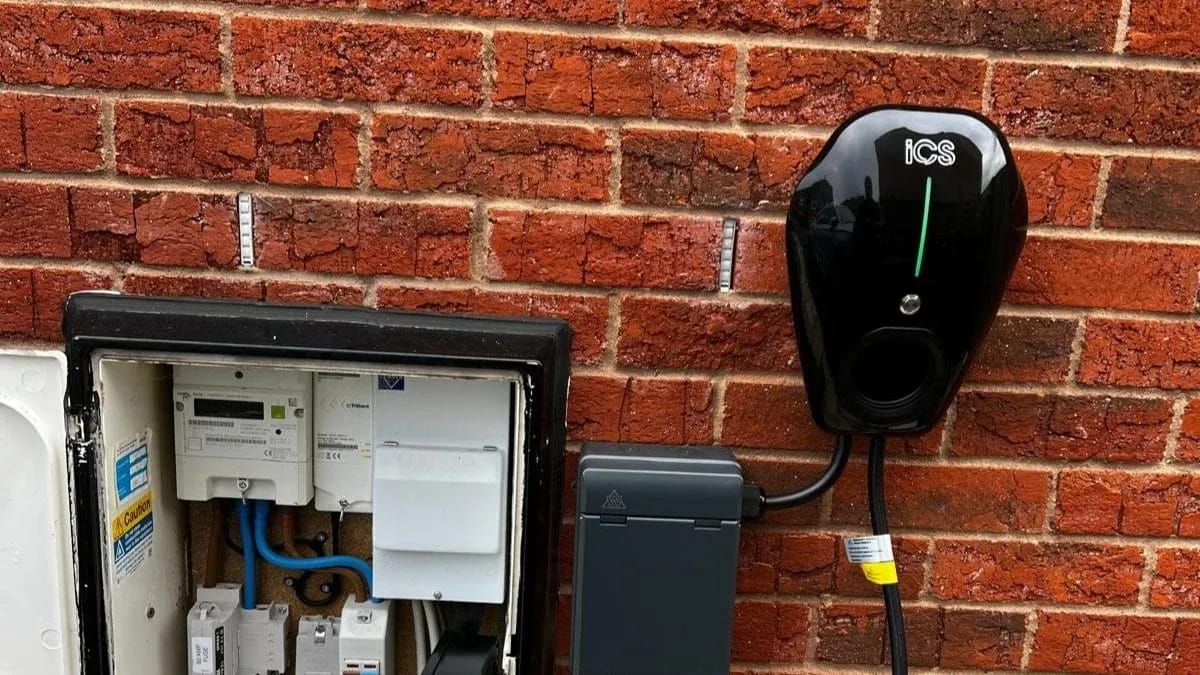
There isn’t one EV charger installation cost, because most of the work sits between your meter and the spot where the car parks, not in the box on the wall. How much it costs to install an EV charger at home comes down to your supply, the length and route of the cable, the earthing, the style of charger and the paperwork. That’s why we look at the house before we put a figure on it.
This guide walks through each of those in turn, so that when you compare quotes you can see what each one does and doesn’t include.
What drives EV charger installation cost
| What we look at | Why it changes the job |
|---|---|
| Your supply and main fuse | Whether the house can take a charger as it is, or needs load management or a supply change first |
| The cable run | How far it is from the consumer unit to the charger, and what it has to pass through on the way |
| Earthing and PEN fault protection | Whether the charger’s own protection covers it, or more has to go on the wall |
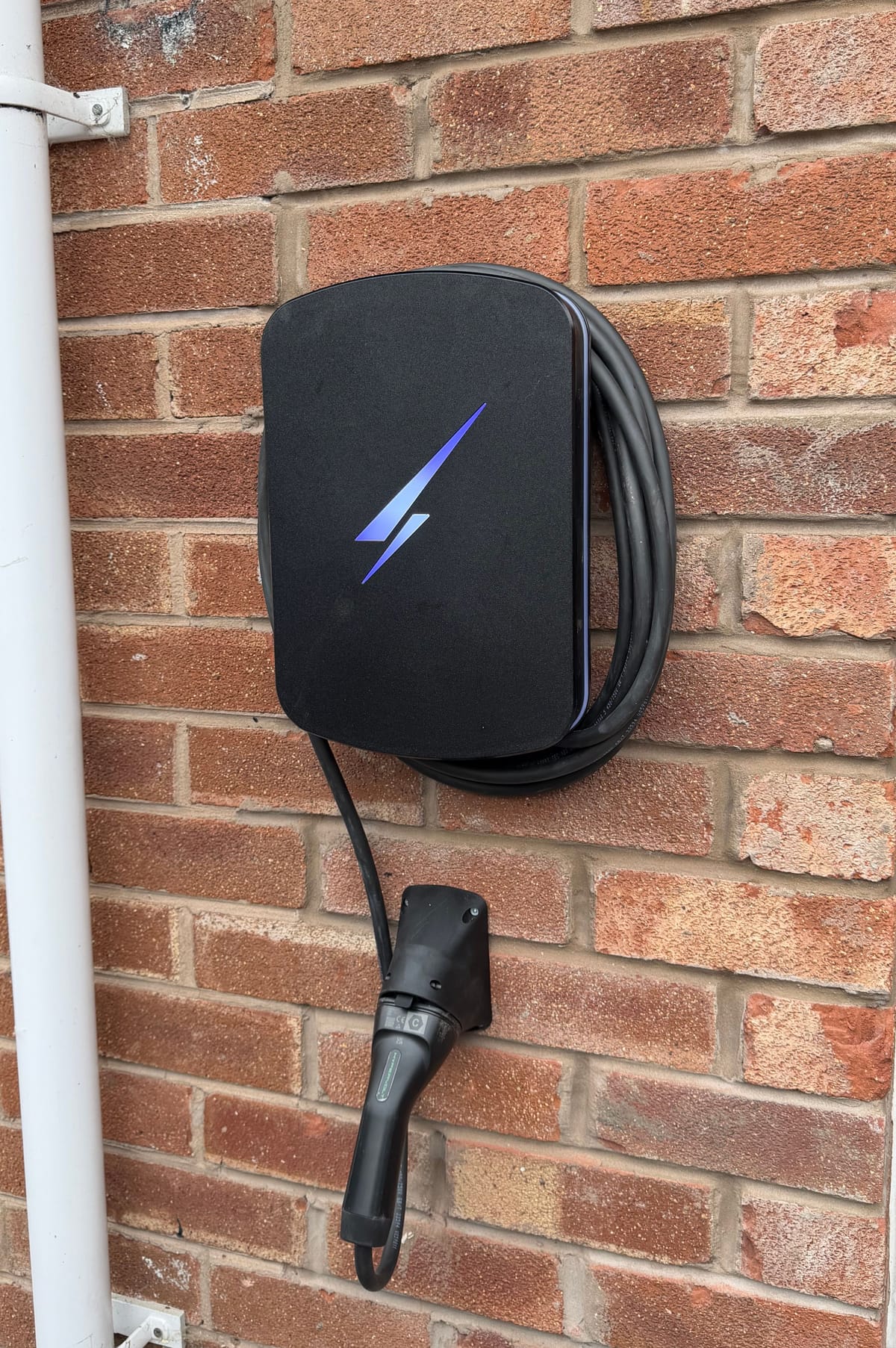
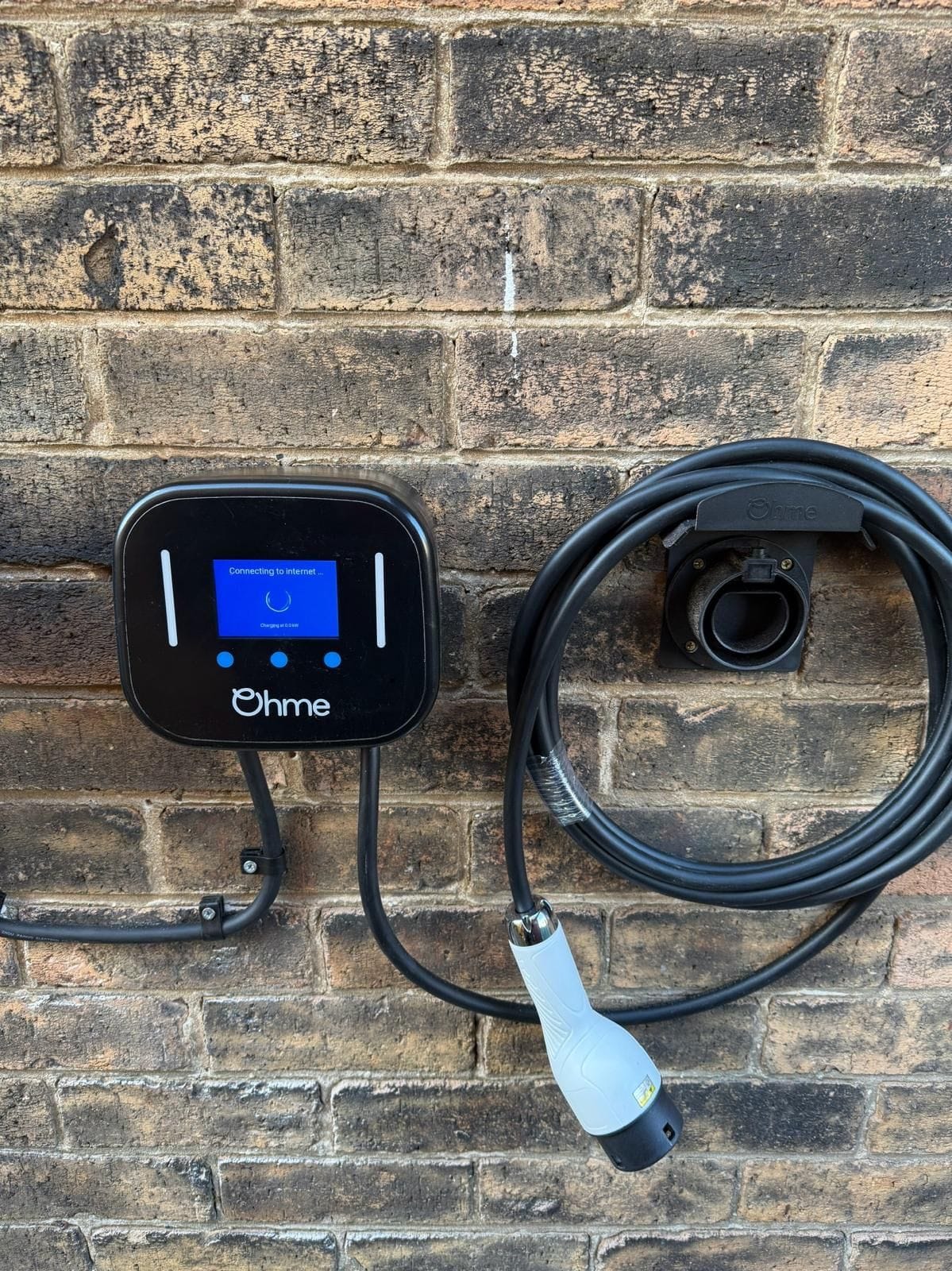
| Tethered or untethered | Which unit, and which cable length, suits where you park |
| Smart features | Required by law on every new home charger, so they come with the unit rather than as an extra |
| Network operator paperwork | Fit and notify, or apply first and wait for an answer |
| Making good | Holes, clips, trunking and anything that has to be put back as it was |
Your supply, the main fuse and load management
A home charger draws a lot of power for hours at a time. The Hypervolt Home 3 Pro, for example, is published at 7.4 kW single phase, with a maximum of 32 A. Add that to an electric shower, an oven and a heat pump on a cold evening and the total can get close to what your supply is built for.
The network operators set the line. The Energy Networks Association says that if the property’s maximum demand, including the charger, is 60 A per phase or less and the supply is adequate, the installer can fit the charger first and tell the network operator within 28 days. Above that, connect and notify is still allowed if a scheme caps the whole property at 60 A. Otherwise the installer has to apply first.
That cap is usually load management. A small clamp goes round the incoming supply cable and the charger turns itself down when the house is busy. Hypervolt says its clamp is needed for automatic load management, and that the same clamp lets the charger see spare solar. Fitting it is part of a normal install, but the clamp has to reach the meter tails, so the position of the meter matters.
Some houses need more than a clamp. Electricity North West, the network operator for Greater Manchester and parts of Cheshire, says a looped supply, one shared with a neighbouring property, needs a new supply before a charger goes in. That is the network operator’s work, on its own timescale, and it’s the main reason two houses on the same street can have very different jobs.
The cable run and its route
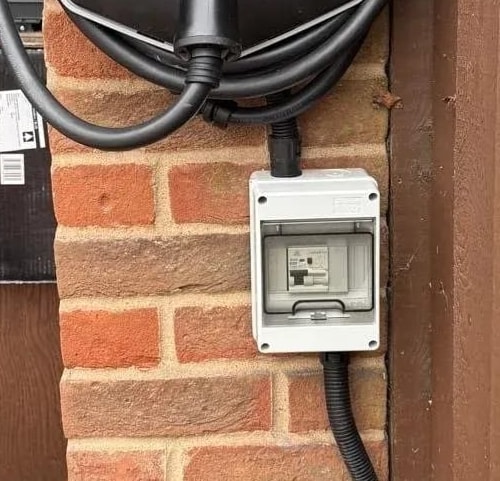
The charger needs its own circuit from your consumer unit. Hypervolt doesn’t build overcurrent protection into the Home 3 Pro, so it goes in at the board as its own MCB or RCBO, which also means the board needs room for it.
From there, the distance and the route decide most of the labour:
- a charger on the outside wall behind the meter is the shortest run
- a charger on a garage at the end of a drive may mean a longer cable, clipped along walls or run underground
- a run through a cavity wall, a loft or a finished room takes longer than one along an outside wall
We plan the route at the check, with you, because it’s also about where you’d rather not see a cable.
Earthing and PEN fault protection
How your house is earthed matters for a charger on an outside wall, where the car’s metal body is connected to that earth while it charges. Part of what we check is protection against a PEN fault, a fault on the conductor that carries the earth and neutral together in some supply arrangements.
Some chargers build that protection in. Hypervolt says the Home 3 Pro has integrated PEN fault protection, compliant with Amendment 2 of BS 7671:2018, and lists TN-C-S, TN-S and TT earthing as supported. If the charger you want doesn’t have it built in, we’d talk you through what else your earthing needs before we price the job. Either way, we check the earthing arrangement at the survey, not on the day.
Tethered or untethered
A tethered charger has the cable fixed to it; an untethered one has a socket and you use your own cable. Hypervolt’s chargers are tethered only, with a 5, 7.5 or 10 m cable, so the distance from the wall to the car’s charging port decides which length makes sense. Our tethered vs untethered guide covers the trade-offs.
Smart features are built in, by law
Every charge point sold for home use in Great Britain has to be smart. The Smart Charge Points Regulations say a charger must be able to send and receive data and change when and how fast it charges. It must also come with default charging hours set outside peak times, which you can change or remove.
So smart charging isn’t an upgrade you pay extra for. It’s part of every compliant unit, and setting up the app with you is part of the install.
Telling the network operator
Every home charger has to be reported to the network operator. Under the 60 A rule above, most domestic installs are fit then notify. Electricity North West’s guidance is direct: “Notify your electricity Distribution Network Operator (DNO) once the charge point has been installed.” Where the house is already over the limit and load management can’t bring it under, the application comes first, and the install waits for the answer. We handle that paperwork for the chargers we fit, and our post on planning permission and DNO notification explains both.
Making good
Last comes the finish. Every hole through a wall gets sealed, cable gets clipped or put in trunking, and anything we move gets put back. A neat job on a brick wall takes a little longer than a rushed one, and it’s the part you look at every day.
The grant for renters and flat owners
There is a government grant towards the cost, but only for some households.
If you rent your home, or own and live in a flat, and you have private off-street parking, the government's chargepoint grant pays 75% of the cost of buying and installing a socket, up to a maximum of £500. Five chargepoint grant schemes are open until 31 March 2027. Homeowners living in a house they own are not eligible. Source: GOV.UK: Electric vehicle chargepoint grant for renters and flat owners
The installer has to be OZEV-authorised to claim it. Our EV charger grants guide sets out who qualifies and how the application works.
Why we quote after a check
Two quotes for the same charger can be far apart, and usually it’s because one has allowed for something the other hasn’t: a longer run, a busier board, load management, or a supply the network operator has to look at first. A figure given without seeing the house either guesses high to cover all of that, or guesses low and comes back with extras.
What we’d do
We’d start at the meter: the main fuse, the earthing and whether the supply is shared. Then the consumer unit, to see if there’s room for the charger’s own circuit. Then we’d walk the route to where you park and agree where the unit goes. With that done, we can give you a fixed quote that says what’s included, and tell you whether it’s fit and notify or whether the network operator needs an application first.
Where to go next
Our EV charging service page covers what a charger install with us includes, and the Hypervolt page has the published specification for the charger we fit. If you already have panels, our guide to charging an EV from your own roof explains the solar modes. We’re based in Ellesmere Port and fit chargers across Cheshire, Merseyside and Greater Manchester, including in Chester.