
The best home EV charger for you: a buyer's checklist.
Not a ranking: our checklist for any home EV charger. Smart rules, cable style, 7 kW or 22 kW, solar modes, load management, PEN protection, tariffs.
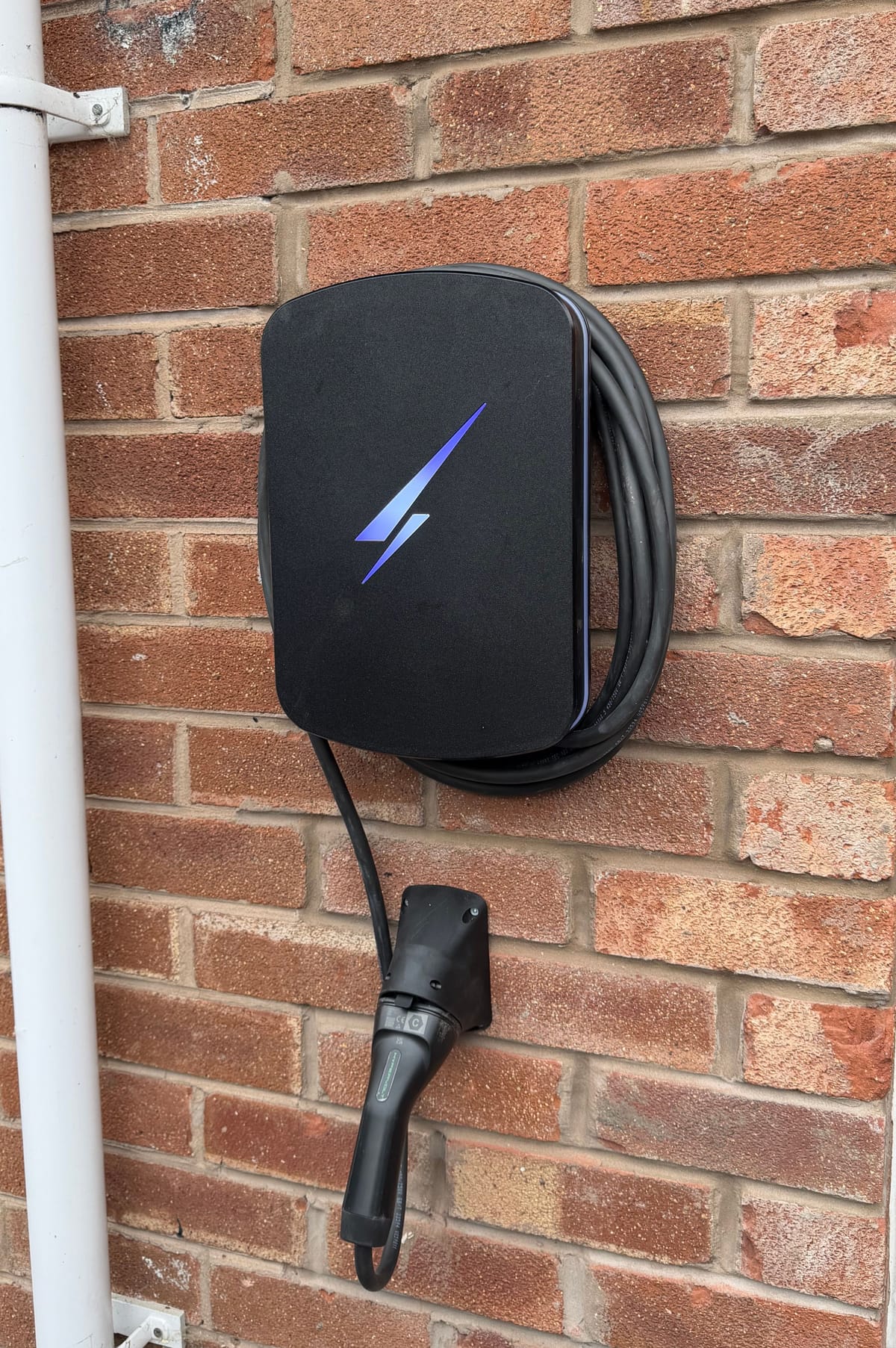
The best home EV charger is the one that suits your supply, your parking, your car and your tariff, so there isn’t one answer for every house. Every new home charger in Great Britain already has to meet the same smart-charging rules. What separates them is cable style, power, solar modes, load management, built-in protection, tariff support, the app and where it can be mounted.
This is the checklist we use. It works for any charger, including ones we don’t fit.
1. The smart-charging rules every charger must meet
The Electric Vehicles (Smart Charge Points) Regulations 2021 set a floor that every home charger sold in Great Britain has to clear. Under them, a charger must:
- have smart functionality, meaning it can send and receive data and change the rate and timing of charging in response to a signal
- come with default charging hours set outside peak hours, which the regulations define as 8am to 11am and 4pm to 10pm on weekdays, and let you change or remove them
- let you override its default mode
- apply a randomised delay of up to 600 seconds by default, which you can override
- meet security rules, including a unique password rather than a shared default, software that can be updated securely, and tamper protection that alerts you
So “smart” on its own doesn’t set one charger apart from another. Any charger that’s legal to sell for home use has these.
2. Tethered or untethered
The Energy Saving Trust describes the choice simply: a tethered charger has a permanent cable attached, and an untethered one has a socket you plug your own cable into. Tethered is quicker to use; untethered gives you a tidier wall and a choice of cable. Our tethered vs untethered guide goes through it properly.
3. 7 kW or 22 kW
This one is decided by your house more than by the charger.
| Around 7 kW | 22 kW | |
|---|---|---|
| Supply needed | Single phase | 400V three phase |
| Common at homes | Yes | Uncommon, since most UK homes are single phase |
| Speed limit | The car’s onboard charger | The car’s onboard charger |
The Energy Saving Trust says 22 kW charging is only possible on a 400V three-phase supply, and a council planning note points out that most UK homes are single phase. It also makes the point that the car’s own onboard charger caps the speed: if the car can only accept a lower rate, it charges at that rate whatever the charger is rated at. For most driveways, a single-phase charger of around 7 kW is the realistic choice.
4. Solar modes
If you have panels, or plan to, look for modes that put spare solar into the car. The useful ones let you choose between charging at full power, mixing solar with grid power, and waiting for solar only. Hypervolt, for example, publishes Eco, which uses solar and grid with a 1.4 kW floor, and Super-Eco, which uses only solar and home battery energy and draws nothing from the grid. Our guide to charging an EV from your own roof explains how those modes behave on a grey day.
5. Load management and the CT clamp
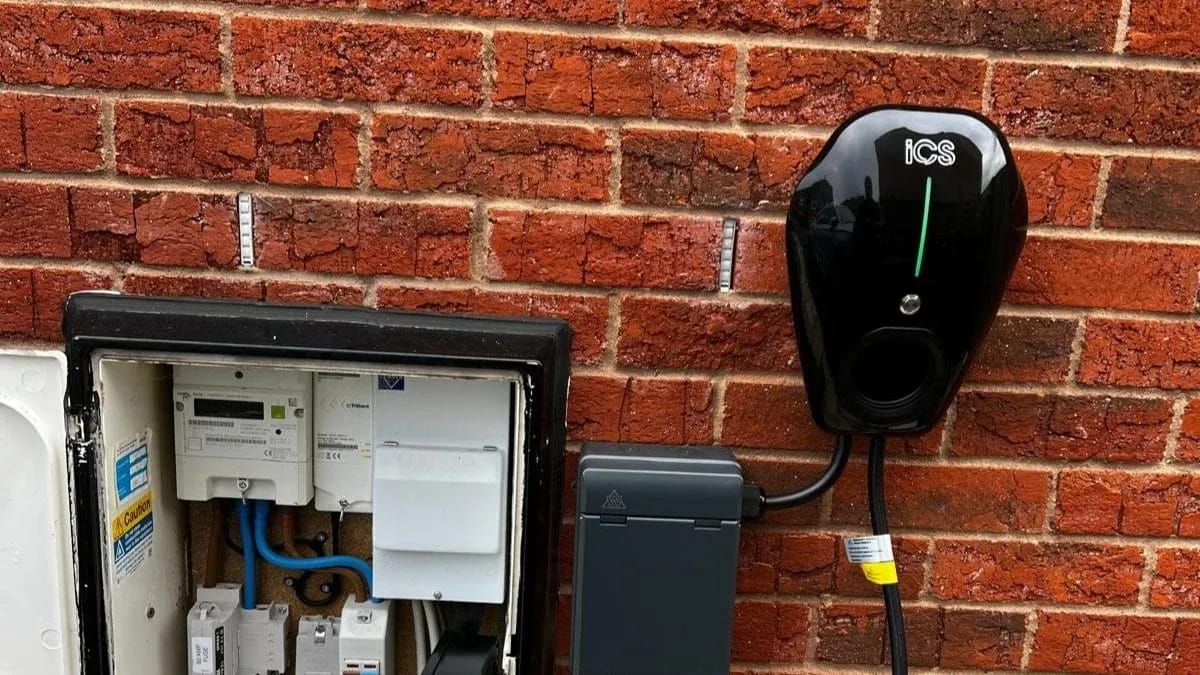
A charger that watches the whole house can turn itself down when the oven and shower are on, and stay within what your supply can take. That’s done with a clamp round the incoming supply cable. Ask whether the charger supports it, whether the clamp is included, and whether the same clamp is used for solar charging. It also matters for the paperwork: load management that caps the house at 60 A can keep an install on the simpler fit-and-notify route with the network operator.
6. PEN fault protection
Check whether the charger has PEN fault protection built in, and which earthing arrangements the manufacturer says it supports. If a charger doesn’t have it built in, ask the installer what they’d fit instead and whether it’s in the quote.
7. Tariff integration
Some smart tariffs control the charger, or the car, directly. Intelligent Octopus Go is one: Octopus says it automatically schedules your charge for when energy is expected to be cheaper, with an advertised six-hour cheap window between 23:30 and 05:30 for the whole home. If you’re on, or planning to switch to, a tariff like this, check that the charger is supported. Our post on Intelligent Octopus Go and your home charger covers it in more detail.
8. The app
You’ll use the app more than the charger itself. Look for one that lets you change the default hours, switch modes and see what each charge used. Ask how the charger connects: Wi-Fi, Bluetooth, or a wired connection if the unit is a long way from your router. Updates that arrive over the air keep it current without a visit.
9. Where it’s mounted
The unit needs a weatherproof rating that suits an exposed wall, a position the cable can reach the car’s charging port from, and a sensible route back to your consumer unit. Think about which side of the car the port is on and which way you park. If the wall faces a pavement, England’s planning rules from 21 October 2026 set limits on how far it can stick out, explained in our planning permission guide.
The best home EV charger checklist at a glance
- Meets the Smart Charge Points Regulations (any charger sold legally should)
- Tethered or socket, and the cable length you need
- Single phase around 7 kW, unless you have a three-phase supply
- Solar modes, if you have or plan panels
- Load management with a supply clamp
- PEN fault protection built in, or a clear answer on what’s fitted instead
- Support for the tariff you use
- An app that does what you need, with a connection that reaches the charger
- A weatherproof unit in a sensible spot
Why we fit Hypervolt
We fit the Hypervolt Home 3 Pro, and the reason is that its published features line up with that checklist. Hypervolt publishes:
- 7.4 kW on a single-phase supply
- tethered cables in 5, 7.5 or 10 m lengths
- Boost, Eco and Super-Eco modes, plus a Battery-Safe mode that pauses charging if a home battery starts to discharge
- automatic load management through a clamp on the incoming supply, the same clamp that lets it see spare solar
- integrated PEN fault protection, with TN-C-S, TN-S and TT earthing listed
- an IP66 and IK10 enclosure for wall or pole mounting
- Wi-Fi, Bluetooth and over-the-air updates
- support for Intelligent Octopus Go on the Home 3 and Home 3 Pro, according to Hypervolt
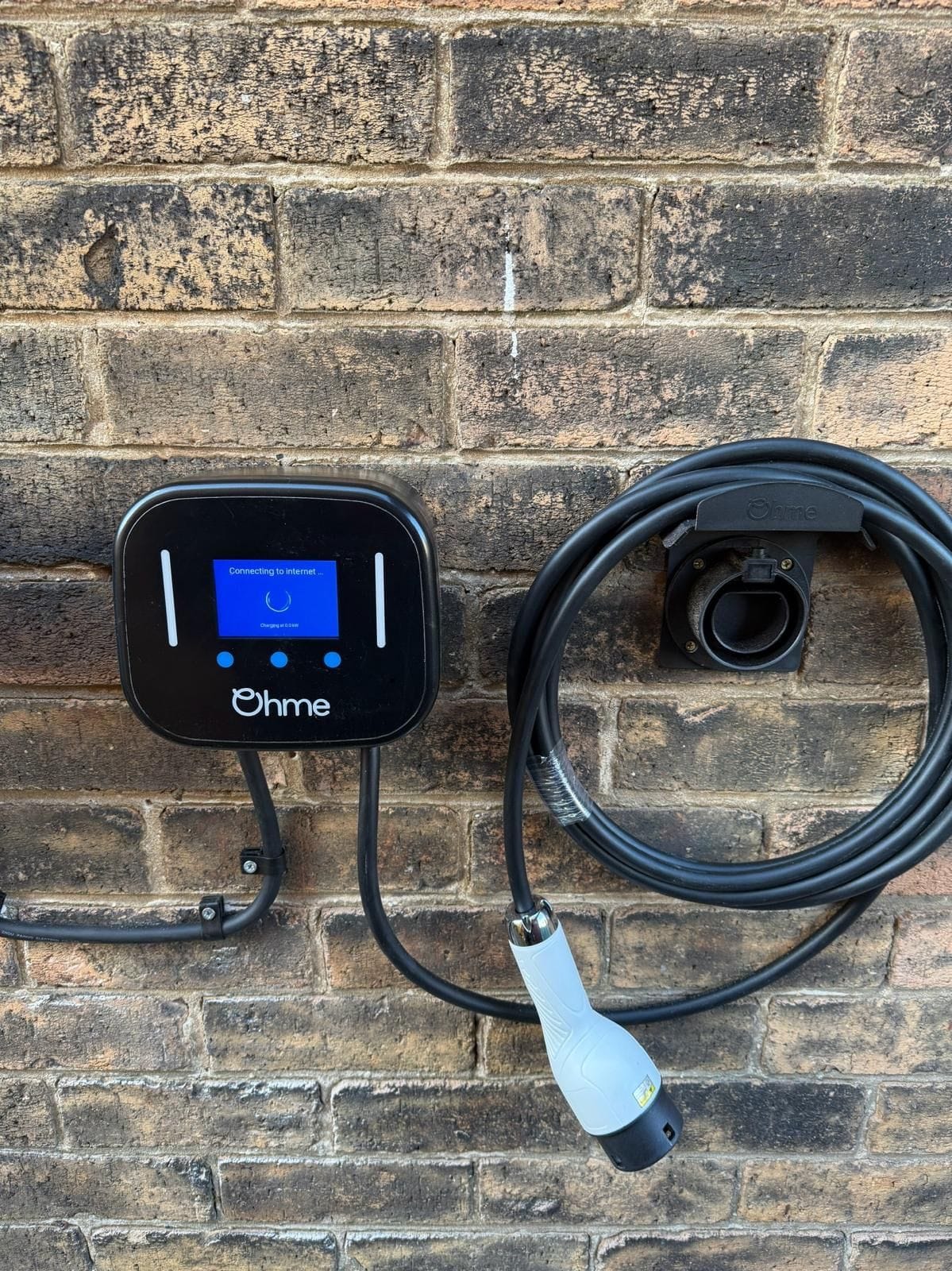
Zappi and Ohme are other chargers on the market. The point of the checklist is that you can hold any of them up against it. The Tesla Wall Connector is supplied on request.
What we’d do
We’d start with your supply: single or three phase, the main fuse, and how busy the house gets. That settles the power question and whether load management is needed. Then we’d look at where you park and which side the car’s port is on, which settles the cable length. Then the tariff and any solar you have. By that point the right charger is usually obvious.
Where to go next
Our EV charging service page and Hypervolt page have more detail, and our EV charger installation cost guide explains what decides the price. We fit chargers across Cheshire, Merseyside and Greater Manchester, including in Liverpool.