

What we fit
Solar PV installation in CheshireSolar PV.
Solar panels are the part of the job everybody pictures, and the part that matters least if the design is wrong. The roof you have decides what is worth fitting: which way it faces, how steep it is, what shades it in the afternoon, and how much of the day you are actually at home.
We survey the house before we design anything, and every solar PV installation we do across Cheshire is built around your own electricity use rather than a package off a price list.
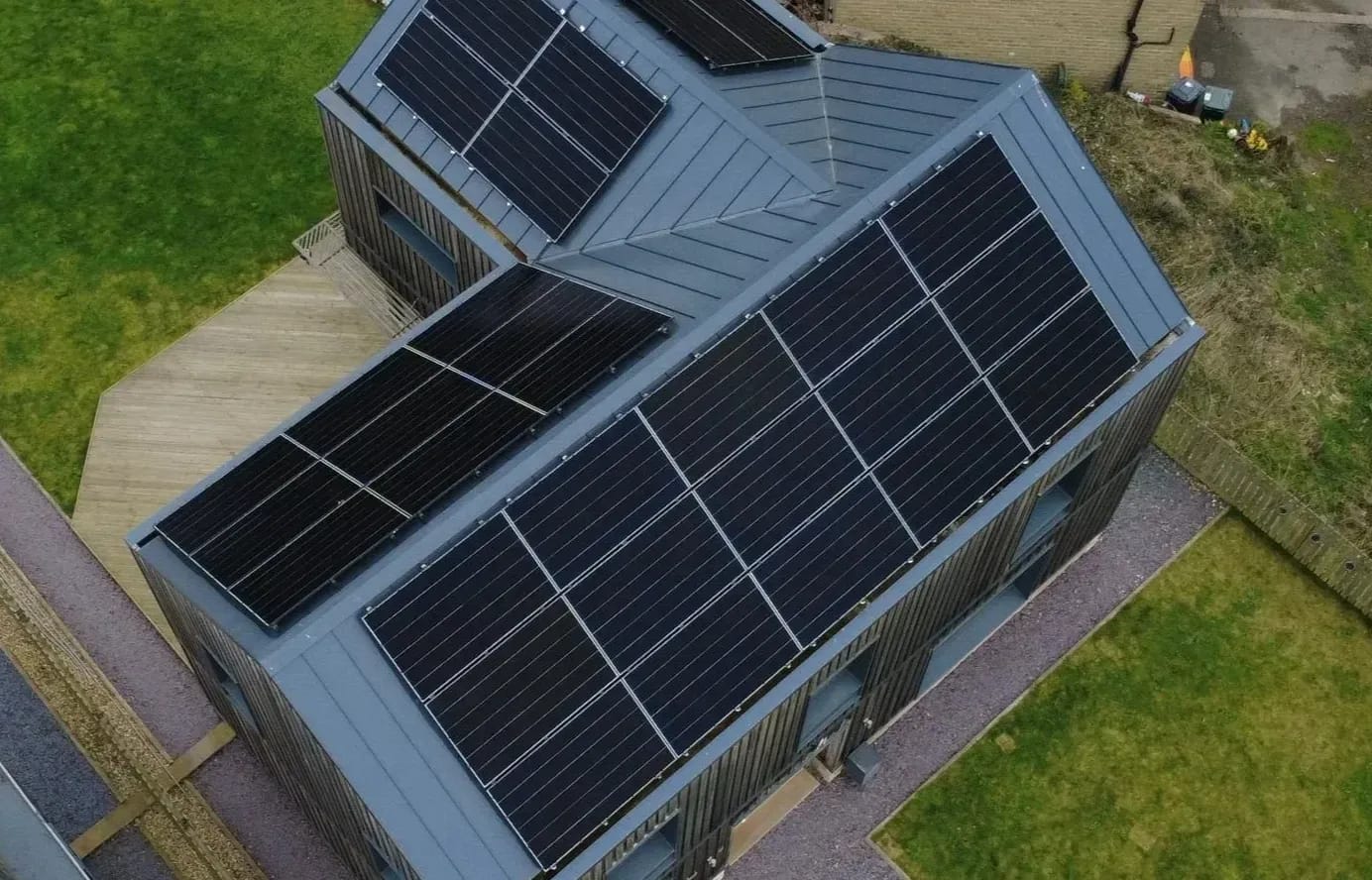
In short
A south-facing roof near our Ellesmere Port base makes about 951 kWh a year for every kWp of panels (PVGIS). Fitted by an installer who supplies and installs them, solar panels are zero-rated for VAT until 31 March 2027. What homes in the North West paid per kW last year is on our solar panel cost page; your price comes from a survey of your roof. Solar panel cost in the UK
The roof studio
Turn the house, fill the roof.
A Cheshire semi on a turntable. Drag it round, then tell it about your roof and your house — the panels, the battery, the current running through it and the numbers all move together.
01Your roof
02Your house
Estimated generation
3,870
kWh a year
Estimated saving
£834
a year, saved and earned
Estimated payback
10.1
years
System size
4.40 kWp
Panels
10
Your use covered
58%
Of what the roof generates
Worked out for a typical Cheshire roof at the pitch and aspect you picked, on a unit rate of 28p and an export rate of 6.5p — rates this tool assumes, dated September 2026, rather than any tariff you have been offered. Nothing here is a quotation: your roof, your shading and how much electricity you use while the sun is up are what the survey settles.
Take the figures with you.
Copy what the studio worked out for your roof, or send it straight to us with a survey request. None of it is a quote: the survey replaces every figure above with your own.
Every assumption behind the numbers
- Unit rate
- 28p for every unit (kWh) you’d otherwise buy from the grid.
- Export rate
- 6.5p for every unit the house and battery can’t use and send back to the grid.
- Your yearly use
- Worked out from your monthly bill at the 28p unit rate, after a standing charge of about 36p a day — and never less than 1,100 kWh a year.
- What a panel makes
- Each panel is 440 W (0.44 kWp). A kWp makes 880 kWh a year facing south, 760 facing east–west and 620 facing north-ish. For this part of Cheshire the EU’s PVGIS model gives 951 for a south roof at a typical pitch — the studio stays below it.
- Pitch
- Shallow (28°) makes 95% of a typical 38° roof; steep (48°) makes 97%.
- Shading
- A bit of shade costs 10%; heavy shade costs 24%.
- How many panels
- Two rows, growing with your bill from three columns to eight — six panels up to sixteen.
- How much you use yourself
- The share of what the roof makes that the house uses: 30% if you’re usually out, 46% in and out, 62% usually home. A battery adds 24 points and a car charger 6, up to 86% — and never more than 62% of your whole year’s use.
- Saving
- The units you use yourself at 28p, plus the units you export at 6.5p.
- Payback
- The yearly saving set against what a system like the one you’ve built typically costs to install: a base figure, an amount for each panel, and more again for a battery or a charger. The answer is held between 4 and 25 years. The studio never shows that cost, because only a survey can price your roof — so treat the years as a rough guide, not a figure to hold us to.
Monthly and yearly sunshine for this area: PVGIS 5.2, EU Joint Research Centre. The unit rate, the export rate and the standing charge are the studio’s own assumptions, set in September 2026 — not a tariff we have quoted you. Your own rates are on your bill, and a survey works from those.
Solar PV
What the panels are actually doing up there.
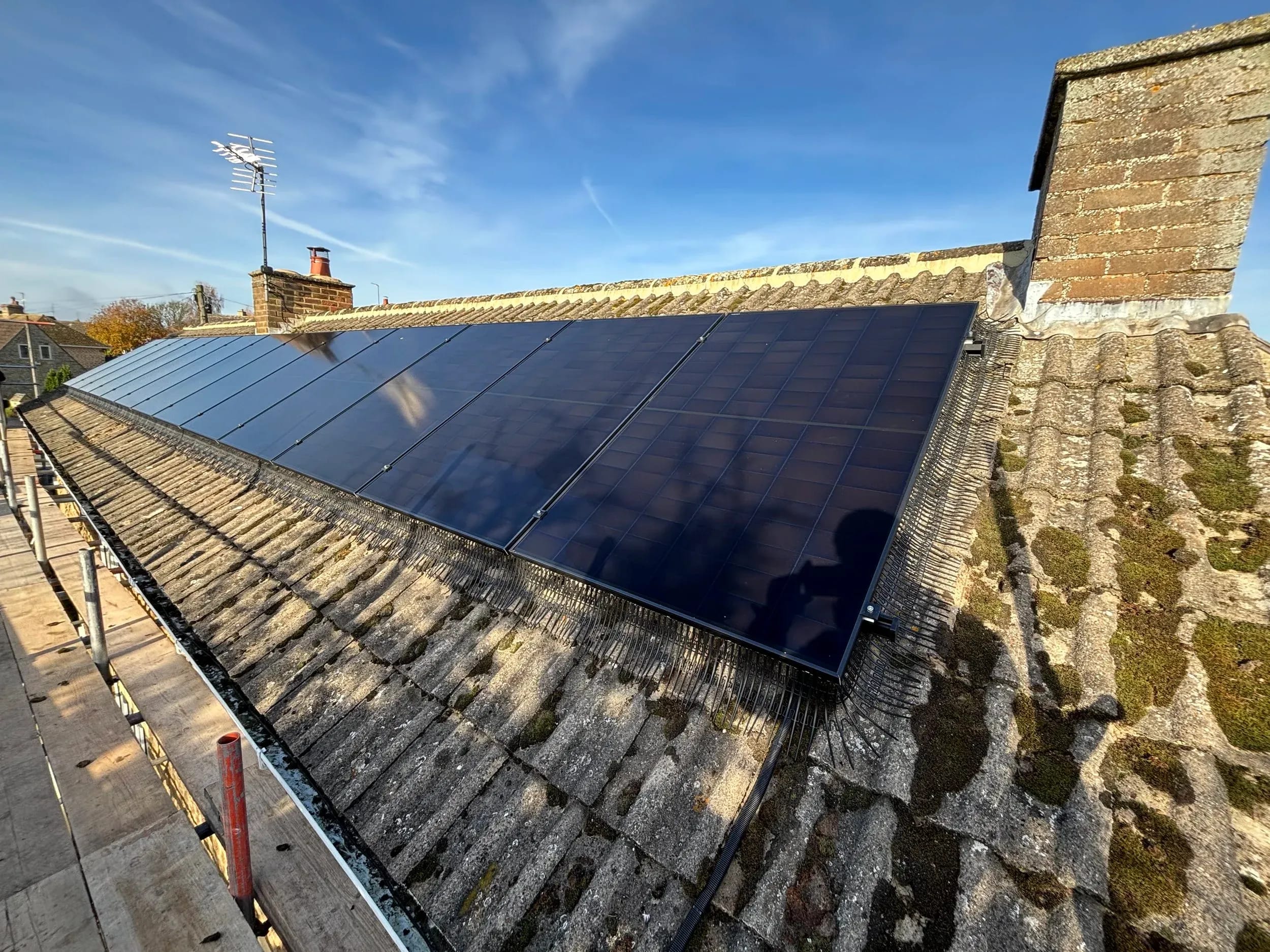
A panel turns daylight into direct current; the inverter turns that into the alternating current your sockets use. Everything the house is using at that moment is served from the roof first, and only the shortfall comes from the grid.
That is why the shape of your day matters as much as the size of the array. A house with somebody in it at midday uses far more of what the roof makes than a house that empties at eight and fills again at six — which is the problem a battery exists to solve.
Solar PV
What a proper design looks at.
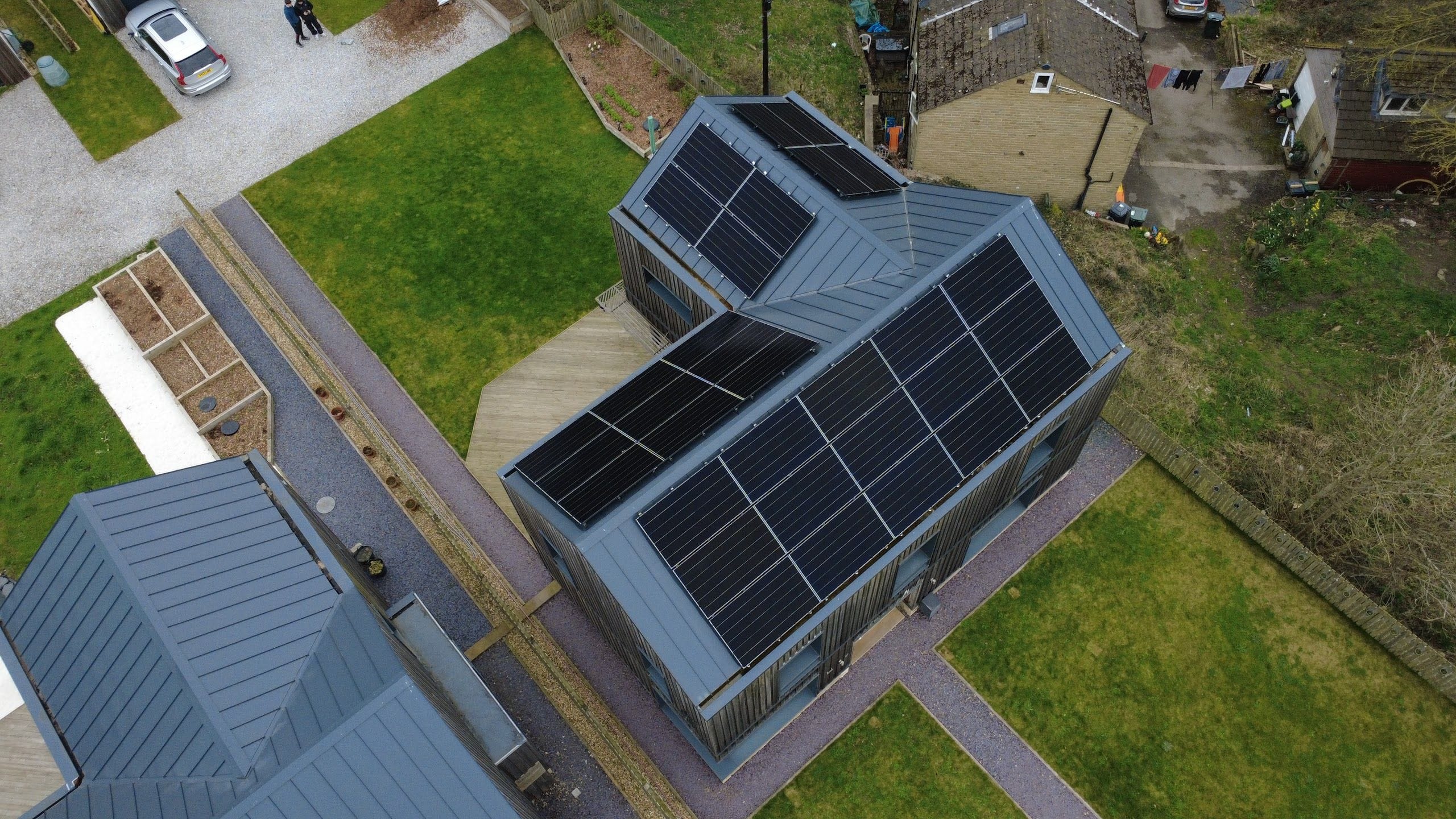
Five things decide what your roof is worth doing, and none of them can be judged over the phone.
- Which way the roof facesSouth earns the most per panel, but east and west roofs spread the generation across the morning and the evening, which often suits a working household better.
- The pitchA typical UK pitch is close to ideal. A shallow roof or a steep one changes the yield by a few per cent, not by half — worth measuring, not worth panicking about.
- What shades itA chimney, a dormer or next door’s conifer costs more than its share, because a shaded panel drags on the string it sits in. Panel-level electronics or a different layout usually answers it.
- The roof itselfTile type, batten condition and the structure underneath decide the fixings and, occasionally, whether the roof needs attention before anything goes on it.
- Where the kit livesInverter, isolators and the run back to the consumer unit need somewhere sensible, ventilated and reachable. We agree it on the survey, not on the day.
Solar PV
What a roof round here makes in a year.
From PVGIS 5.2, the European Commission’s own irradiation model, run for our base in Ellesmere Port rather than a national average.
- About 951 kWh
- per kWp of south-facing array at a typical pitch, over a year.
- Roughly a quarter
- of that year’s generation lands in June and July together; December and January contribute a few per cent between them.
- East and west
- come out around four fifths of south, spread earlier and later in the day.
The roof studio on the home page works from your own bill, on a south yield of 880 kWh per kWp — deliberately below the figure above.
Solar PV
The survey decides it, not a phone call.
We look at the roof, the loft, the consumer unit and the meter before anything is quoted. That visit is what tells us whether the array you have in mind fits, where the cable can honestly run, and whether the incoming supply will take the inverter you want.
You get the design after that, with the assumptions written down — array size, where each string sits, what the inverter is, and what we expect it to generate.
Solar PV
From first call to switch-on.
- 01First callA few questions about the house, the bills and what you want out of it. If the roof is wrong for solar, we say so then.
- 02SurveyA proper look at roof, loft and supply, with photographs and measurements. No design is drawn before this.
- 03Design and paperworkSystem layout, expected generation and the network application. Nothing is ordered until you have seen it.
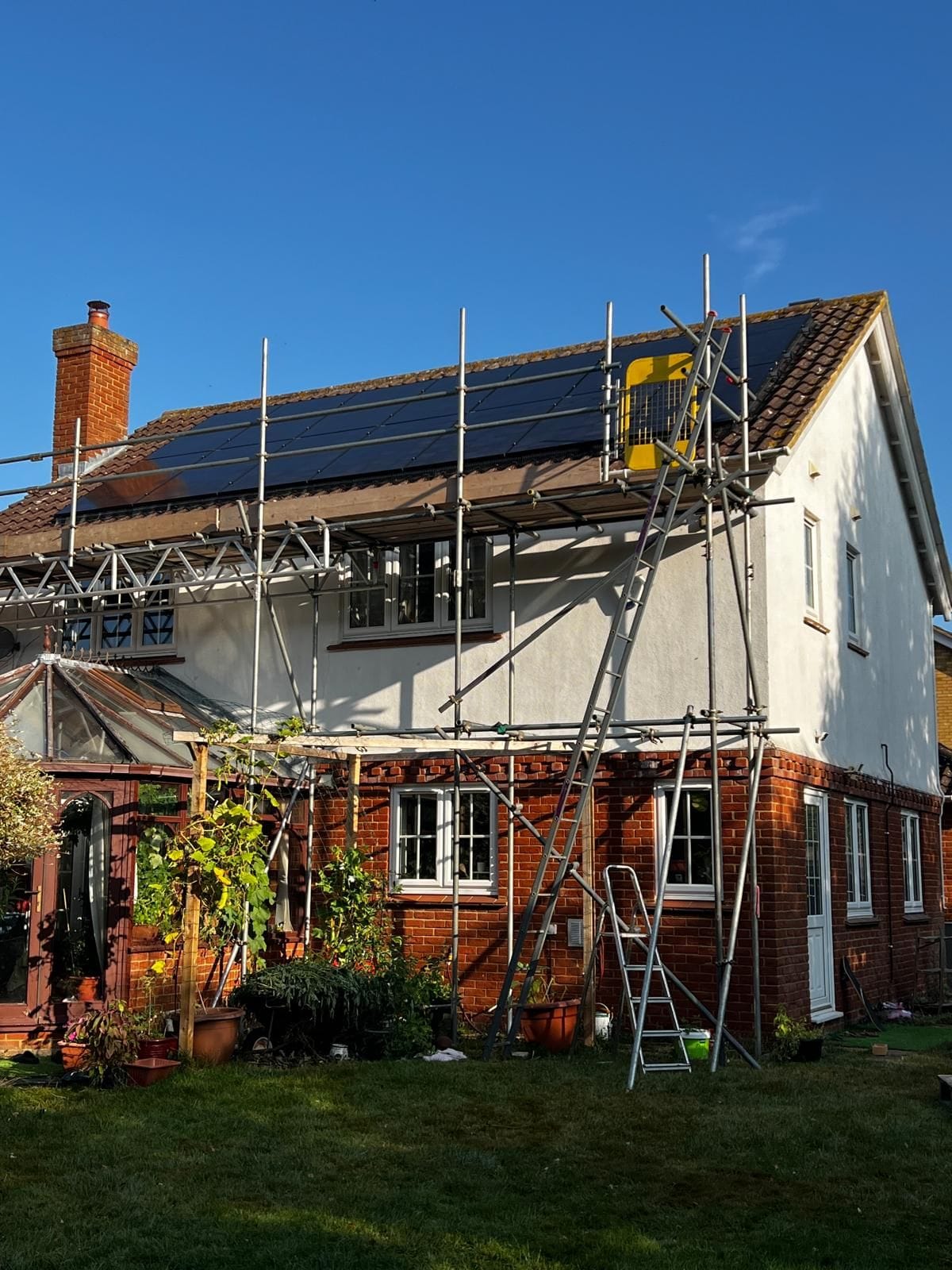
- 04InstallScaffold up, array set out, everything wired back and tested — usually inside a day or two for a domestic roof.
- 05Switch-on and handoverCommissioning, the app set up with you, your MCS certificate, and the export paperwork started.
Solar PV
The paperwork that comes with it.
All of it is ours to do, and all of it is checkable afterwards.
- MCS certificateIssued against our MCS registration for solar PV and battery storage, certified by NAPIT. It is the document your export application depends on.
- The network operatorSmall systems are notified to the network within 28 days of commissioning under G98; anything larger is applied for and agreed before it is connected, under G99.
- Smart Export GuaranteeEvery large supplier must offer an export tariff. You apply to a supplier of your choosing with the MCS certificate; the rates are theirs, not ours.
- Electrical certificationThe installation certificate for the work at the board, and the building control notification that goes with it.
What we fit on these jobs
The kit, and the rest of the work.
Kit we fit for this
From the Google profile
Homeowners on this work.
18 of our 39 Google reviews mention solar PV. Here are 8 of them, word for word.
Asked on every survey
Solar PV, the questions first.
If yours isn’t here, give us a ring and ask, or see every question.
Solar panels capture sunlight and convert it into electricity for your home. By using solar energy, you can reduce your electricity bills and decrease your environmental footprint. Solar power is a renewable energy source, helping you save money and contribute to a sustainable future.
Our solar installation process typically includes an initial consultation, a detailed assessment of your energy needs, custom system design, the network operator application, installation, and system testing. We handle every step to ensure your system is set up for optimal efficiency.
The savings vary depending on your location, electricity usage, and system size. During your consultation, we provide a detailed estimate based on your home’s specific energy needs.
Most homes can benefit from solar panels, but several factors can impact suitability, such as roof orientation, shading, and available space. During our initial assessment, we’ll evaluate your property to determine if solar is the right choice for you.
From the blog
Worth reading before you decide.
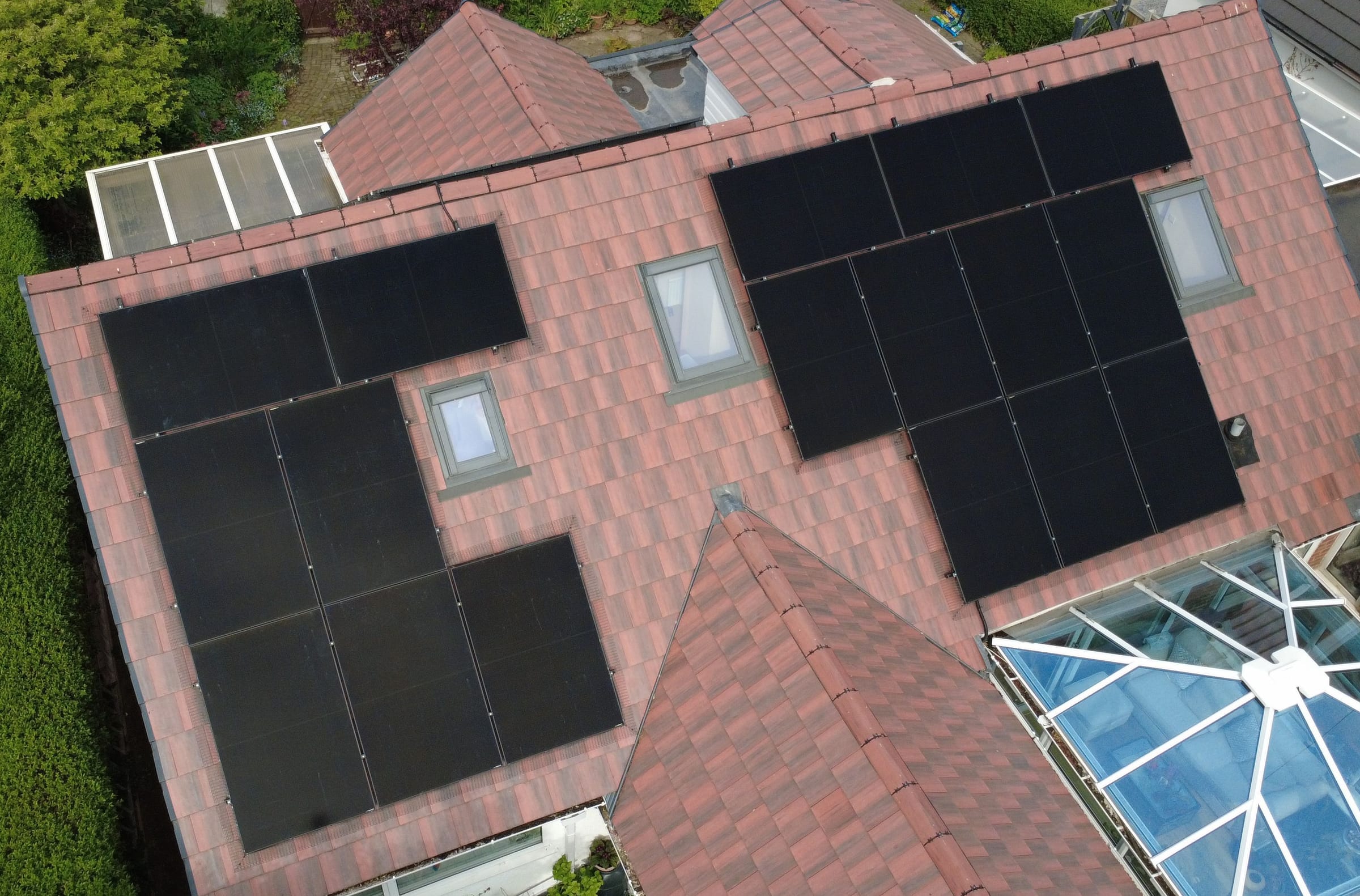
Do solar panels need planning permission?
When solar panels on a house are permitted development in England and Wales, the limits that apply since August 2026, and when you need the council first.
15 October 2026
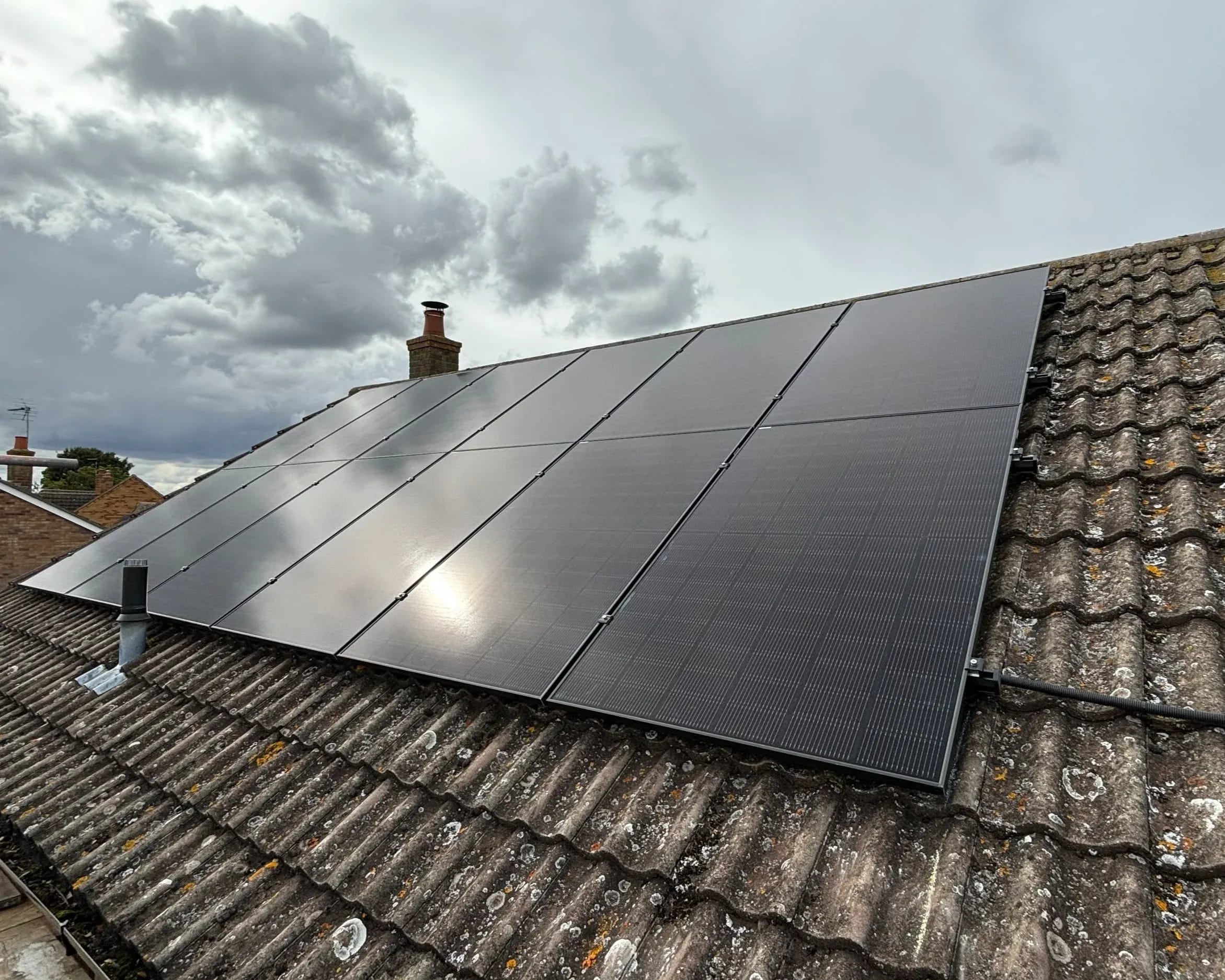
Do solar panels work in winter?
Yes, but far less: what a south-facing roof in Cheshire makes month by month, why winter is a small slice of the year, and what a battery does in December.
15 October 2026
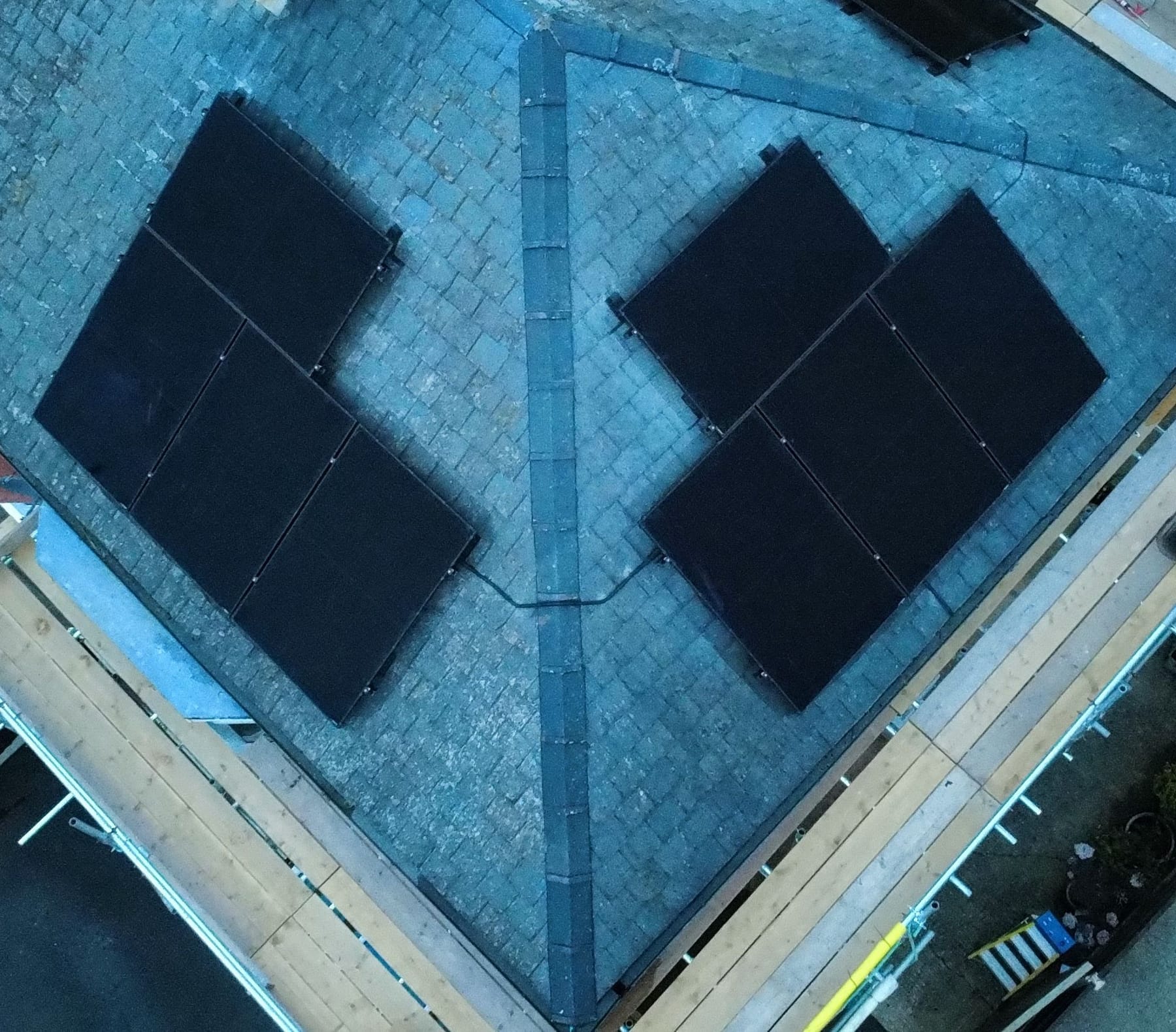
Solar panels on a flat roof: how they're fitted and what's allowed
How solar panels are fixed to a flat roof, why ballast needs a wind calculation and an engineer, the roof warranty, and the planning limits that apply.
15 October 2026
Where we do it
Solar PV installation, town by town.
From our base in Ellesmere Port, across Cheshire, Merseyside and Greater Manchester. The towns nearest us come first.
- Solar PV installation in ChesterEllesmere Port · Helsby · Neston · Chester
- Birkenhead solar PV installationBebington · Heswall · Birkenhead · Liverpool
- Solar PV installation across Greater ManchesterAltrincham · Manchester · Stockport
Cheshire
- Solar panels in Ellesmere Portunder 2 milesCheshire West and Chester
- Solar panels in Helsby6 milesCheshire West and Chester
- Solar panels in Neston6 milesCheshire West and Chester
- Solar panels in Chester7 milesCheshire West and Chester
- Solar panels in Frodsham8 milesCheshire West and Chester
- Solar panels in Runcorn8 milesHalton
- Solar panels in Widnes9 milesHalton
- Solar panels in Mold13 milesFlintshire
- Solar panels in Tarporley13 milesCheshire West and Chester
- Solar panels in Warrington15 milesWarrington
- Solar panels in Northwich17 milesCheshire West and Chester
- Solar panels in Winsford17 milesCheshire West and Chester
- Solar panels in Wrexham17 milesWrexham
- Solar panels in Middlewich20 milesCheshire East
- Solar panels in Nantwich22 milesCheshire East
- Solar panels in Knutsford22 milesCheshire East
- Solar panels in Crewe24 milesCheshire East
- Solar panels in Sandbach25 milesCheshire East
- Solar panels in Wilmslow28 milesCheshire East
- Solar panels in Congleton30 milesCheshire East
- Solar panels in Macclesfield32 milesCheshire East
Merseyside and the Wirral
- Solar panels in Bebington4 milesWirral
- Solar panels in Heswall8 milesWirral
- Solar panels in Birkenhead9 milesWirral
- Solar panels in Liverpool9 milesLiverpool
- Solar panels in Wallasey11 milesWirral
- Solar panels in West Kirby13 milesWirral
- Solar panels in Hoylake13 milesWirral
- Solar panels in St Helens14 milesSt Helens
- Solar panels in Southport25 milesSefton
Greater Manchester
- Solar panels in Altrincham24 milesTrafford
- Solar panels in Manchester30 milesManchester
- Solar panels in Stockport32 milesStockport
Before the survey: what solar saves in a year · when panels need planning.
Solar PV installation across Cheshire, Merseyside and Greater Manchester, from our base in Ellesmere Port.
Start here
Start with a conversation, not a quote.
Tell us the postcode and roughly what you use. We’ll tell you honestly whether the roof is worth doing — and if it isn’t, that’s a perfectly good answer too.
- Takes about a minute
- You get a person, not a brochure
- No obligation, and no visit until you ask for one