
Do I need planning permission for an EV charger?
Most home EV chargers are permitted development. England's rules change on 21 October 2026, Wales keeps its 2019 rules, and the DNO must always be told.
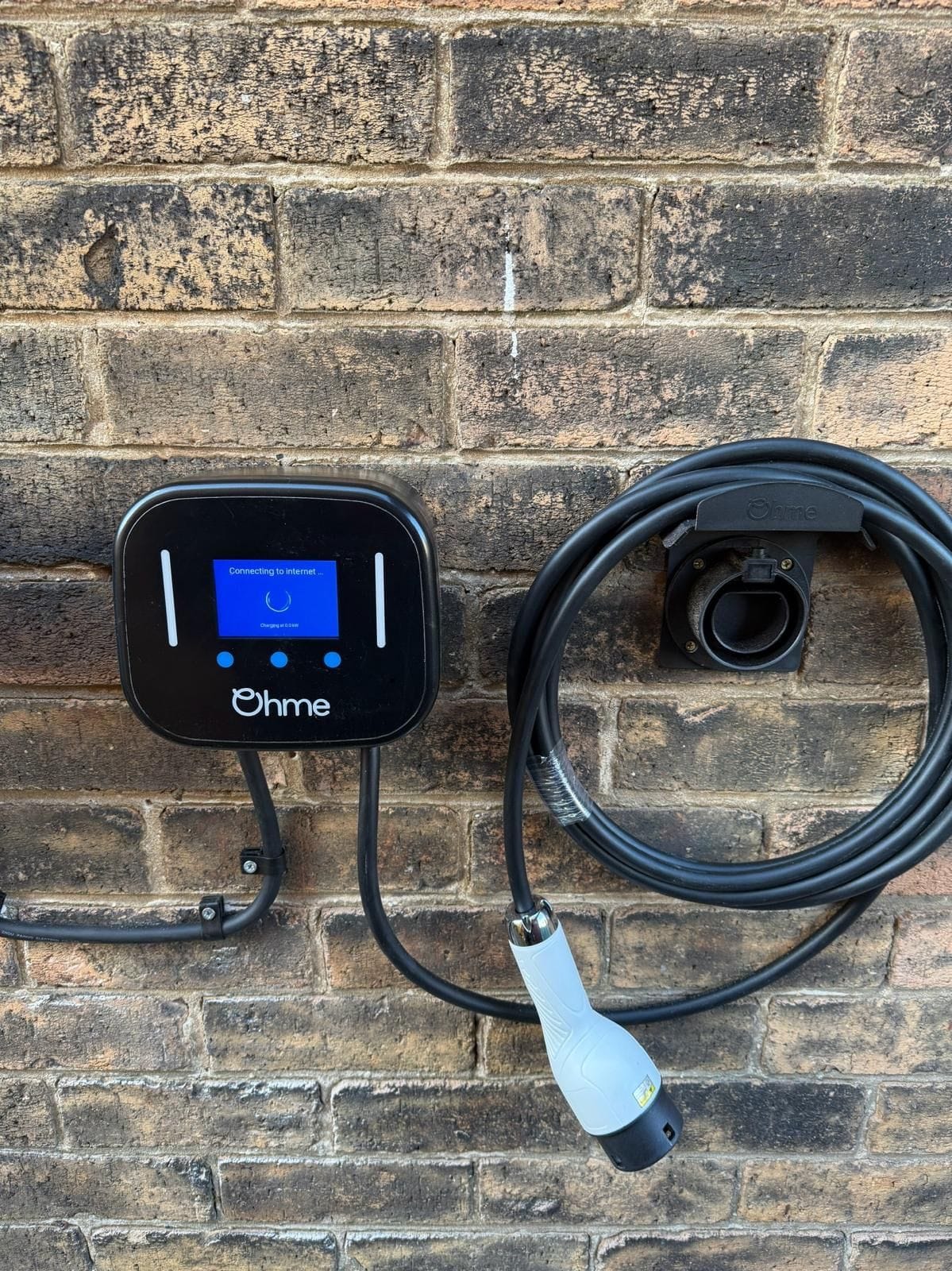
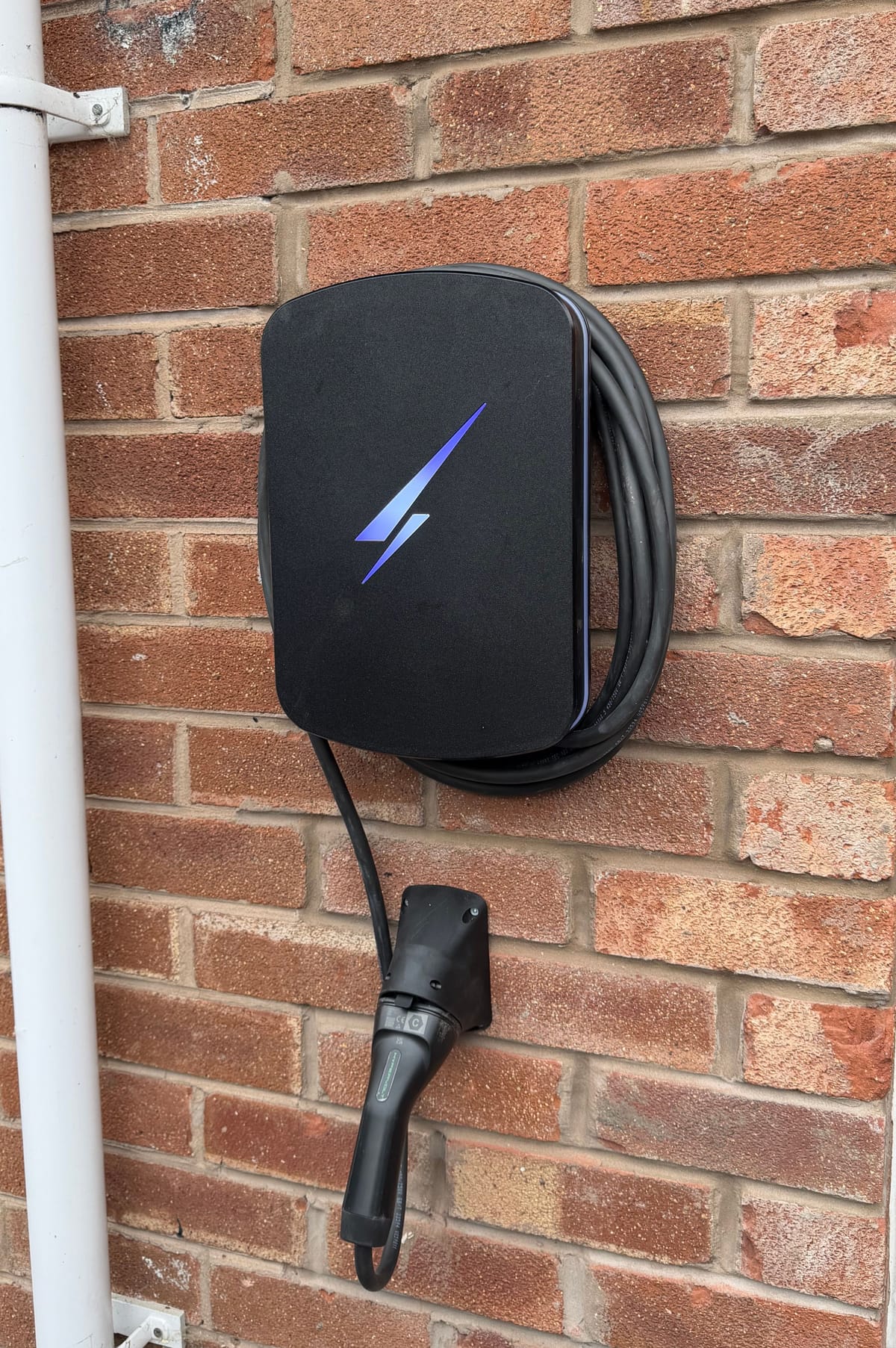
For most homes, no. A wall-mounted EV charger is usually permitted development, which means it doesn’t need a planning application as long as it stays within set limits. In England those limits change from 21 October 2026, Wales keeps the rules it brought in in 2019, and listed buildings need extra care. Separately from planning, the network operator always has to be told.
Here’s what the rules say on each side of the border, and how the network operator side works.
Do I need planning permission for an EV charger in England?
Permitted development rights for chargers sit in Class D (a wall-mounted outlet) and Class E (a free-standing upstand, the post-style unit) of the planning rules for England.
Up to 20 October 2026
The current text makes a wall outlet in an area lawfully used for off-street parking permitted development. Within that, the outlet and its casing must not exceed 0.2 cubic metres, and it must not be within a scheduled monument or the curtilage of a listed building.
There used to be a bar on wall outlets within 2 m of a highway. That was removed on 29 May 2025. The same change raised the height limit for upstands in non-domestic parking to 2.7 m; an upstand in a home’s curtilage stays at 1.6 m, with no more than one per parking space.
From 21 October 2026
A new order, SI 2026/1056, made on 25 September 2026, comes into force on 21 October 2026 and rewrites both classes. For a wall-mounted charger at home, the main points are:
- Anywhere in the curtilage. A wall outlet is also permitted development anywhere within the curtilage of a house or a block of flats, not only in an off-street parking area.
- Height. The outlet must not be more than 1.6 m above ground level.
- One per curtilage on the new route. Where you rely on the new curtilage route rather than the off-street parking one, there’s a maximum of one outlet per curtilage.
- Conservation areas. The new curtilage route doesn’t apply in a conservation area.
- Walls next to the highway. A charger must not protrude more than 0.2 m, and at least 1.5 m width of footway must be left clear.
- Cables across a footway. A cable across a footway must use an authorised cross-pavement solution.
Upstands change too: from 21 October they’re also permitted in the curtilage of a house or flats, at up to 1.6 m high, and that curtilage route doesn’t apply in conservation areas either.
One thing we’re not stating yet: the order’s text, as published, doesn’t reproduce whether the 0.2 cubic metre limit and the listed building and scheduled monument exclusions carry over. We’ll update this post when the consolidated text is published. Until then, if your home is listed or in a conservation area, speak to the council before anything goes on the wall.
| England | Up to 20 Oct 2026 | From 21 Oct 2026 |
|---|---|---|
| Where a wall charger can go | Off-street parking area | Off-street parking area, or anywhere in the curtilage of a house or block of flats |
| Wall outlet height | — | Up to 1.6 m above ground |
| On a wall next to a highway | The old 2 m bar was removed in May 2025 | Max 0.2 m protrusion, at least 1.5 m of footway kept clear |
| Cable over a footway | — | Authorised cross-pavement solution |
| Conservation area | — | New curtilage route not available |
Wales: the 2019 rules still apply
Wales has its own planning order. Since 1 April 2019, a wall outlet in an area lawfully used for off-street parking has been permitted development there, with these limits:
- the outlet and casing must not exceed 0.2 cubic metres
- it must not face onto and be within 2 m of a highway
- it must not be within a scheduled monument
An upstand in Wales can be up to 1.6 m high, must not be within 2 m of a highway, must not be in a scheduled monument, and there can be no more than one per parking space.
The 2 m highway rule is the one that matters most in practice. On a house where the drive runs straight up to a pavement, the obvious wall can be too close, and the charger may need to go further back or on a side wall. England’s 21 October changes don’t apply in Wales.
Listed buildings
The England text in force up to 20 October excludes the curtilage of a listed building from Class D. The Welsh Class D text doesn’t mention listed buildings, which isn’t the same as saying a listed home can do as it likes. For any listed property, on either side of the border, speak to the council first.
The grant rules point the same way. If you’re applying for the government’s chargepoint grant and you live in a listed building, GOV.UK says you’ll need written permission from your local authority to install the chargepoint. Our EV charger grants guide explains who that grant is for.
EV charger DNO notification
Planning is about how the charger looks and where it sits. The network operator, often called the DNO, is about whether your supply can carry it, and it has to be told about every home charger.
The Energy Networks Association sets out the rule. If the property’s maximum demand, including the charger, is 60 A per phase or less and the supply is adequate, the installer fits the charger first and notifies the network operator within 28 days. That’s known as connect and notify.
If demand is already above 60 A, connect and notify is still allowed when a curtailment scheme, such as the charger’s load management, limits the whole property to 60 A or less. Otherwise the installer has to apply first and wait for the network operator’s answer before fitting.
Electricity North West, the network operator for Greater Manchester and parts of Cheshire, puts the simple case in one line: “Notify your electricity Distribution Network Operator (DNO) once the charge point has been installed.” It also says to apply first if the total exceeds 13.8 kW, or 60 A per phase, and that a looped supply needs a new supply before a charger goes in.
We handle the network operator paperwork for the chargers we fit. What decides whether a house needs load management is covered in our EV charger installation cost guide, and our post on G98, G99 and your network operator covers the equivalent forms for solar and batteries.
Which rules apply where we work
Most of our area is in England: Cheshire, Merseyside and the Wirral, and Greater Manchester all follow the English rules, including the changes from 21 October 2026. Wrexham and Mold are in Wales, so the 2019 Welsh rules apply there, with the 2 m highway limit.
What we’d do
At the check, we’d look at where you want the charger and measure it against the rules for your side of the border: its height, how close it is to the pavement, whether the cable has to cross a footway, and whether the property is listed or in a conservation area. If anything is borderline, we’d tell you to ask the council before we fit it. Then we’d check the main fuse and existing load, so we know whether it’s connect and notify or an application first.
Where to go next
Our EV charging service page covers what an install with us includes, and our home EV charger checklist covers mounting position along with the rest. For chargers in Wales, see our Wrexham EV charger page.