
Adding a battery to the solar you already have.
AC-coupled or hybrid, what we check first, what changes on the day and the paperwork involved: how a battery is added to panels already on your roof.
Solar panels make most of their electricity in the middle of the day. If nobody is home to use it, it flows out to the grid, and by the time the kettle and the oven go on in the evening, the panels are making little or nothing. A battery keeps some of that daytime surplus for later.
You don’t have to start again to get one. MCS, the UK’s quality mark for small-scale renewables, puts it plainly: if you already have solar panels, you can still add a battery, and a certified installer can connect one to your existing system. Here’s how that works, what we look at first, and the paperwork that comes with it.
Two ways to add a battery to your solar panels
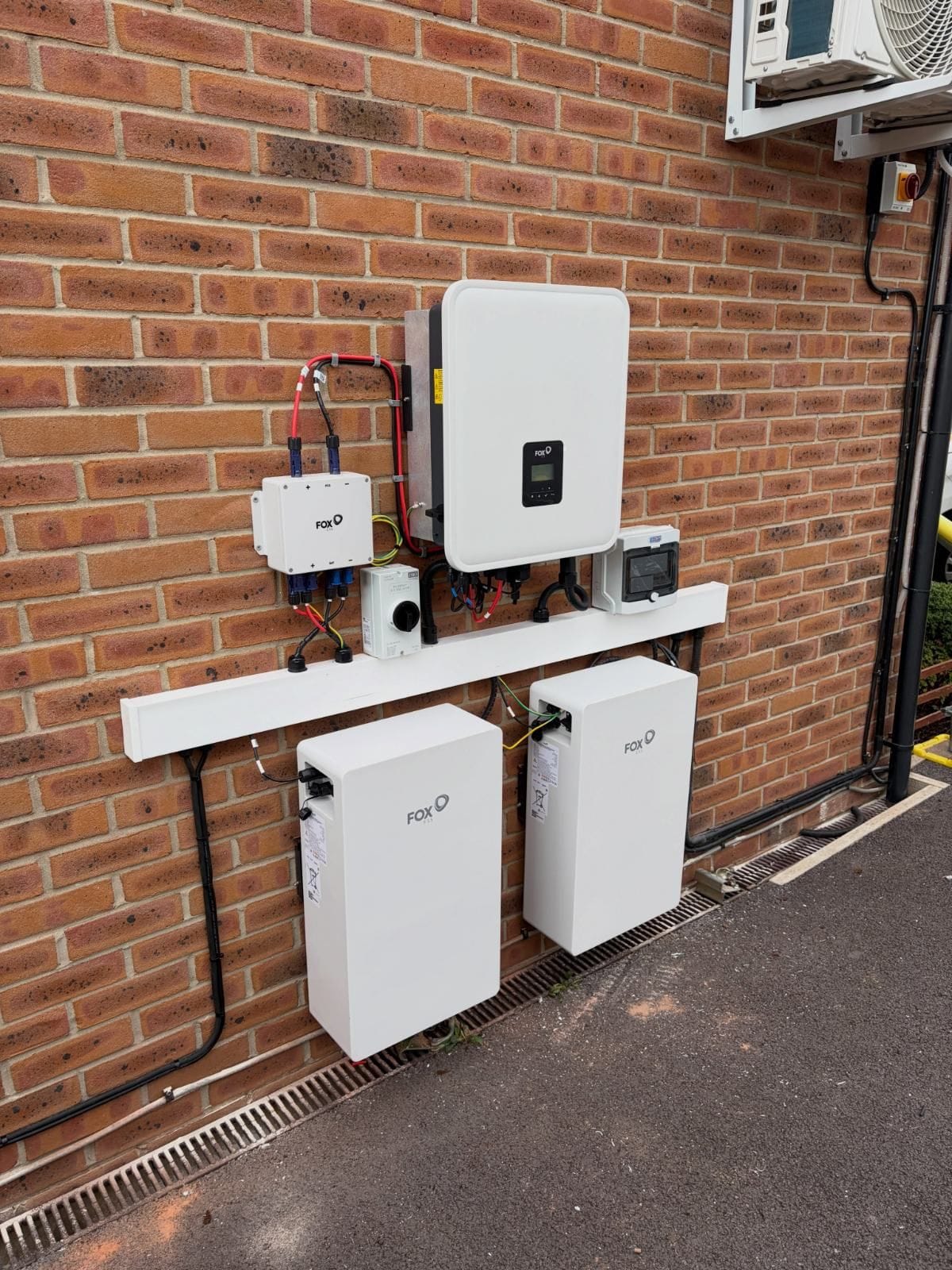
Your panels make direct current (DC). Your home runs on alternating current (AC), so the panels feed an inverter that converts one into the other. Batteries store DC. The two kinds of battery system differ in where the battery joins in.
- AC-coupled. The battery has its own inverter and connects to your home’s AC wiring, alongside the solar rather than through it. Fox ESS describes this as installing the battery on the AC side of an existing solar inverter. Your current inverter stays and carries on as it is.
- DC-coupled, or hybrid. One hybrid inverter runs both the panels and the battery; myenergi describes it as the panels and the battery sharing one inverter. On a system that’s already up, that means taking your existing solar inverter off the wall and fitting a hybrid one in its place, with the panel cables moved across to it.
Neither is right for every house. An AC-coupled battery leaves a solar system that’s working well exactly as it is. A hybrid swap makes more sense when the old inverter is near the end of its life anyway, because one new box then does both jobs.
What we check first
Before we suggest anything, three things decide what’s possible.
The inverter you already have
We note its make, model and rating, and how it’s getting on. That tells us whether an AC-coupled battery can sit happily alongside it, or whether a hybrid replacement is the better route. MCS gives homeowners the same advice: make sure the battery you choose is compatible with your existing solar set-up. The inverter’s rating matters for the paperwork too, which we’ll come to.
Your consumer unit
A battery needs a properly protected connection into your electrics, so we look at whether the consumer unit has room for it and is in a fit state to take it. SP Energy Networks, one of the network operators, asks installers to make sure a property’s supply is suitable for the extra demand and generation that storage brings.
There’s also a small sensor to place, usually a clamp round the incoming supply cable, so the battery can tell whether the house is importing or exporting at any moment.
Where the battery can live
The MCS battery standard, MIS 3012, sets out where a battery can and can’t go. Among other things, it must not:
- get in the way of the escape routes from your home, and a fire in the battery must not compromise a protected escape route
- sit where it could be knocked or damaged in a way its casing isn’t designed for
- be at risk of flooding
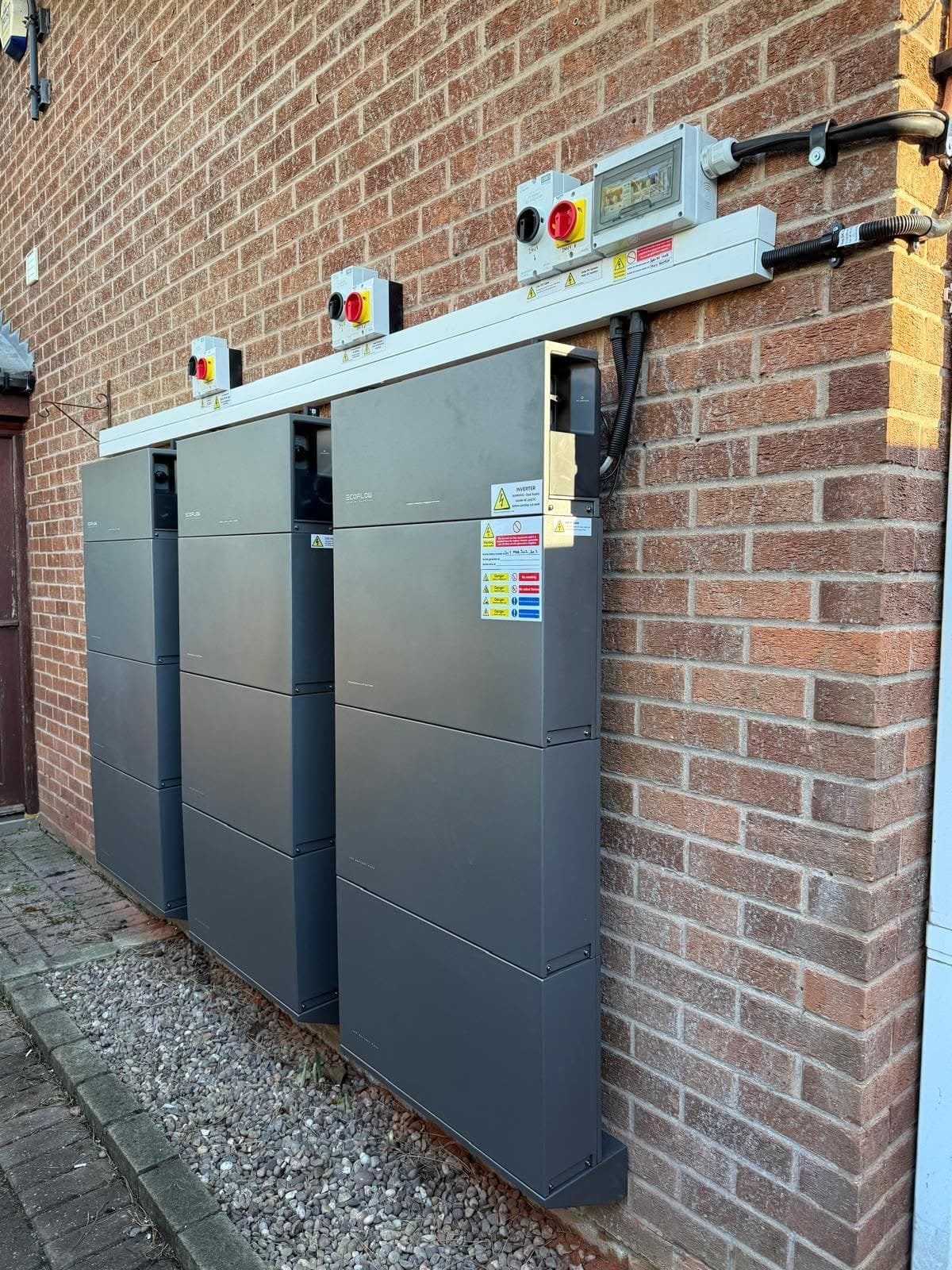
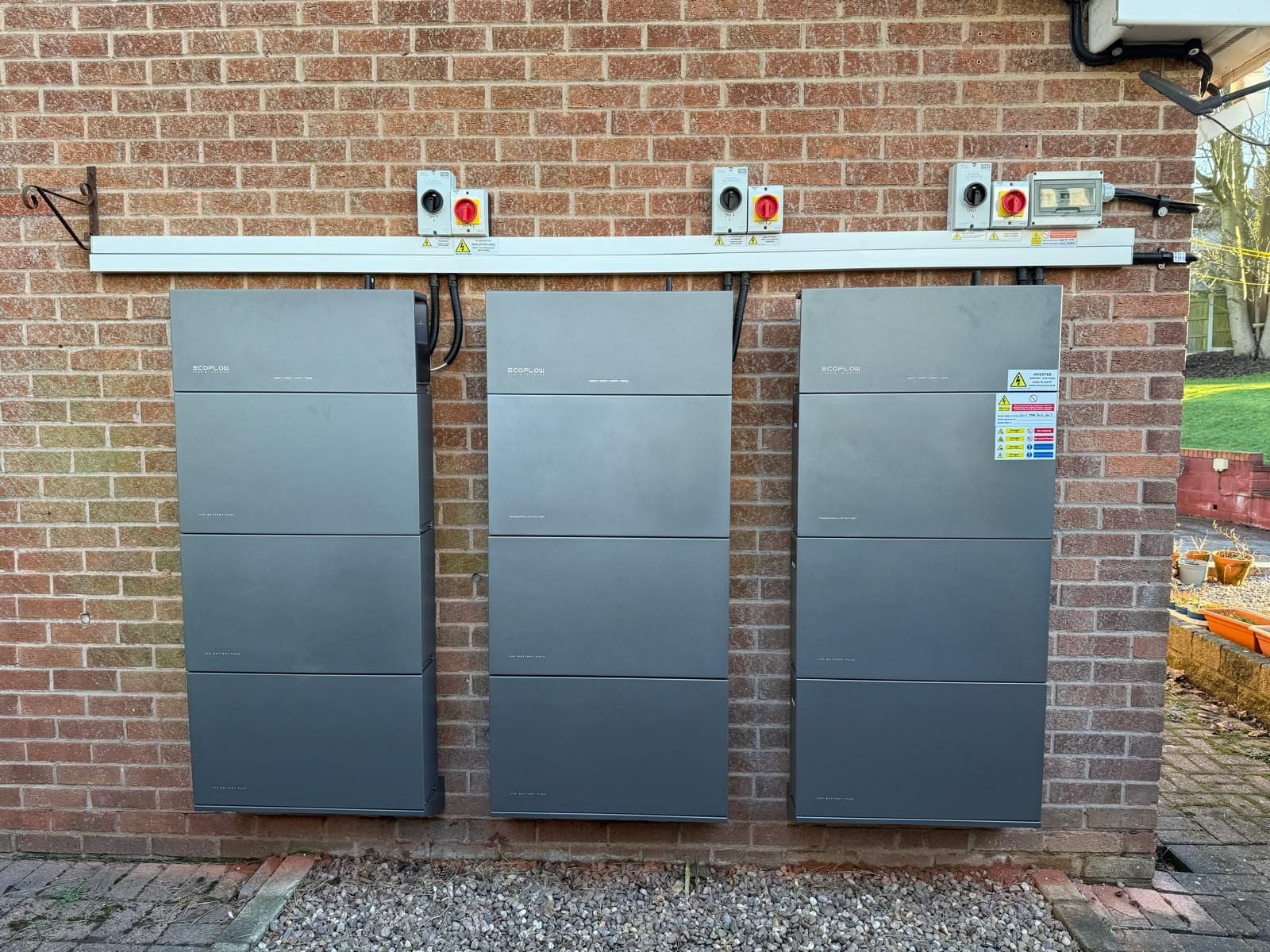
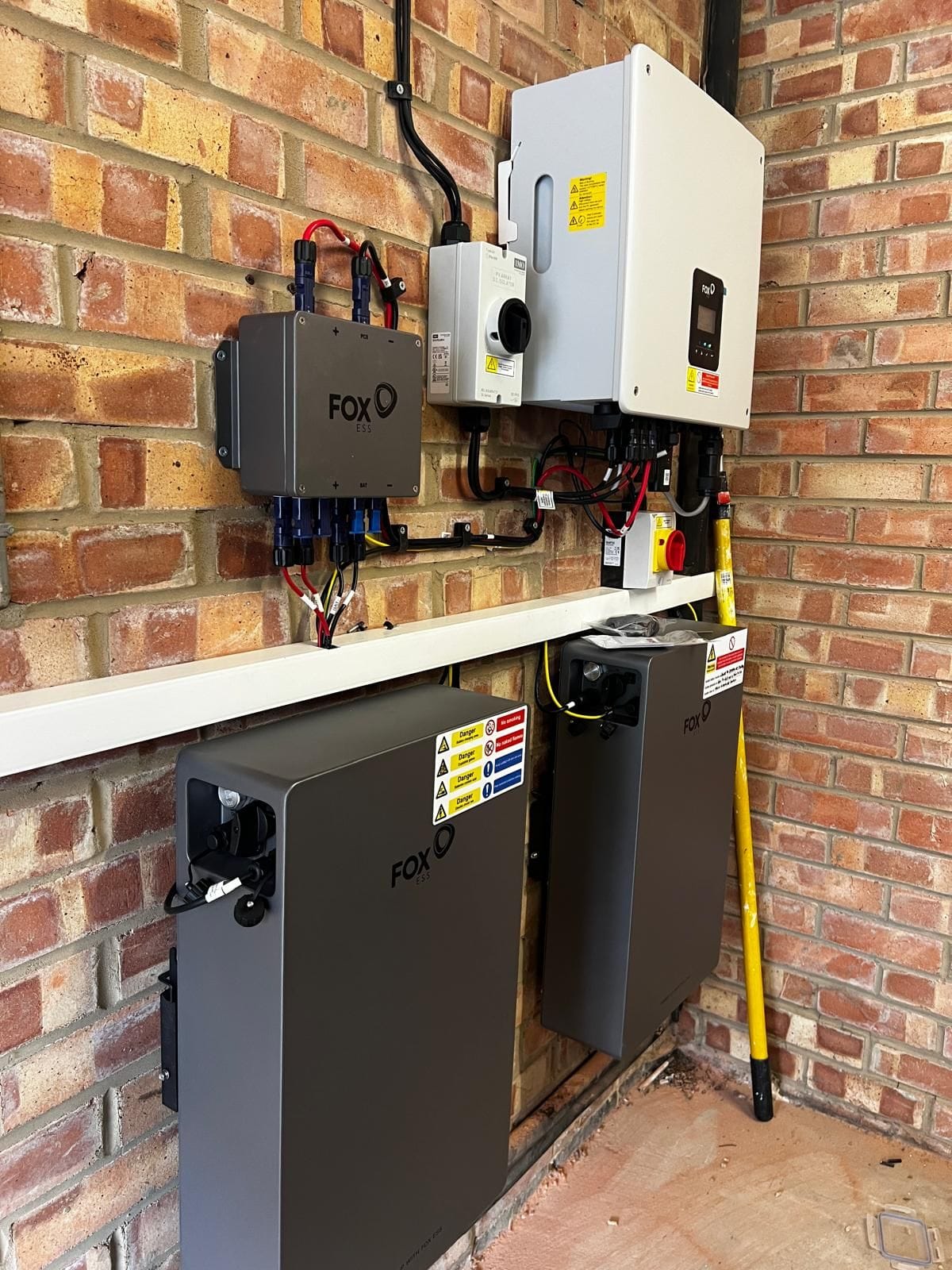
It also needs adequate ventilation, a structurally sound wall that can take its weight, and room for it to be installed and maintained safely. If it goes somewhere you rarely visit, the standard says fire detection should be fitted there as well. In practice that might mean a garage wall, or an outside wall where the battery’s casing is rated for outdoor use.
What happens on the day
With an AC-coupled battery there is no roof work at all. Nothing on the roof changes, so there’s no scaffolding, and your existing inverter stays where it is. The day runs like this:
- The battery and its inverter go up on the wall we agreed with you.
- We run the cable back to the consumer unit and make the connection. The power has to go off while we do this part.
- We fit the supply sensor so the battery can see what the house is doing.
- We test and commission the system, then set up the monitoring app with you on your phone.
With a hybrid swap, the old solar inverter comes off and the new hybrid unit takes the panel cables instead. The panels themselves stay as they are.
One detail on the app: MIS 3012 says that where a system connects to the internet, its network login details are passed to the customer. The app and the account behind it are yours.
The paperwork that comes with it
A battery connects to the grid through your home, so the network operator needs to know about it. The Energy Networks Association says network operators treat storage as both demand and generation, and SP Energy Networks asks to be told about a battery that runs alongside the network even if you never mean to export from it.
Which form depends on the total. The MCS standard gives an example: a 3kW solar system and a 3kW battery on the same single-phase supply add up to more than the 16A per phase covered by a simple G98 notification, so the G99 process applies. That’s how a battery added to a system that went in under G98 can turn the whole job into a G99 one. We handle the network operator paperwork for the systems we fit, and our guide to G98, G99 and your network operator explains the difference.
Two more things if your panels are already on a payment scheme:
- Feed-in Tariff. Ofgem’s guidance says adding storage to a FIT installation should be reported to your FIT licensee, and your generation meter must keep measuring only what the panels generate.
- Smart Export Guarantee. Ofgem says you can add a battery to an installation that’s receiving SEG payments, as long as the export meter can still measure what the solar exports separately from any other source. It suggests checking with your SEG supplier how they’ll treat the change. There’s more in our Smart Export Guarantee guide.
Questions worth asking
Fair questions to ask any installer:
- Is it AC-coupled or a hybrid, and why that one for my system?
- Will my existing inverter stay, and is the battery compatible with it?
- Where will the battery go, and why there?
- How much can it store, and how much power can it deliver at once? MCS suggests thinking about both.
- Does it need a G98 notification or a G99 application, and who is sending it?
- If I’m on the Feed-in Tariff or a SEG tariff, what happens with my meters?
- Is the installer MCS certified for battery storage? MCS’s Find an Installer search will tell you, and MCS suggests checking when you get a quote, before you sign and before work starts.
- Will you set up the app with me before you leave?
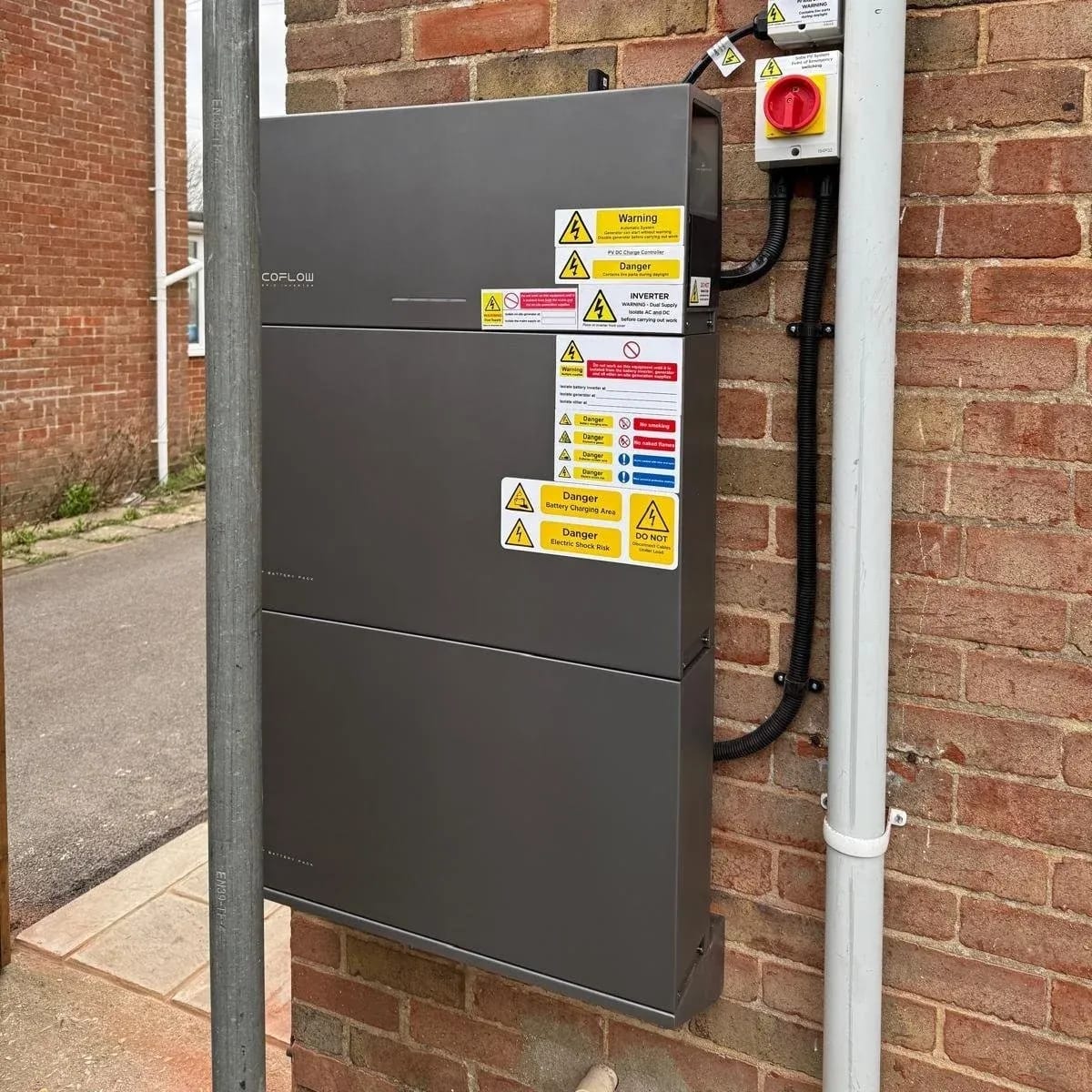
The batteries we fit
We fit Tesla Powerwall, Fox ESS and EcoFlow systems, and which one suits a retrofit depends on what’s already on your wall. We’re MCS certified for battery storage as well as solar PV. There’s more on our page about adding a battery to existing solar, or you can get in touch. The council group scheme in Cheshire has offered a battery on its own to homes that already have panels, which our Cheshire page explains, and the Wirral page covers the schemes on that side of the Mersey.